This is kind of an odd thread to read through, from my point of view, but it is interesting to read the comments here, that I otherwise wouldn't have, thank you!
For those who don't know me, I am the chief developer for Warbirdsim, thus all the visual work you see in Warbirdsim products, is by my hand. I have been somewhat of a long-term lurker here, but I hope to change that!
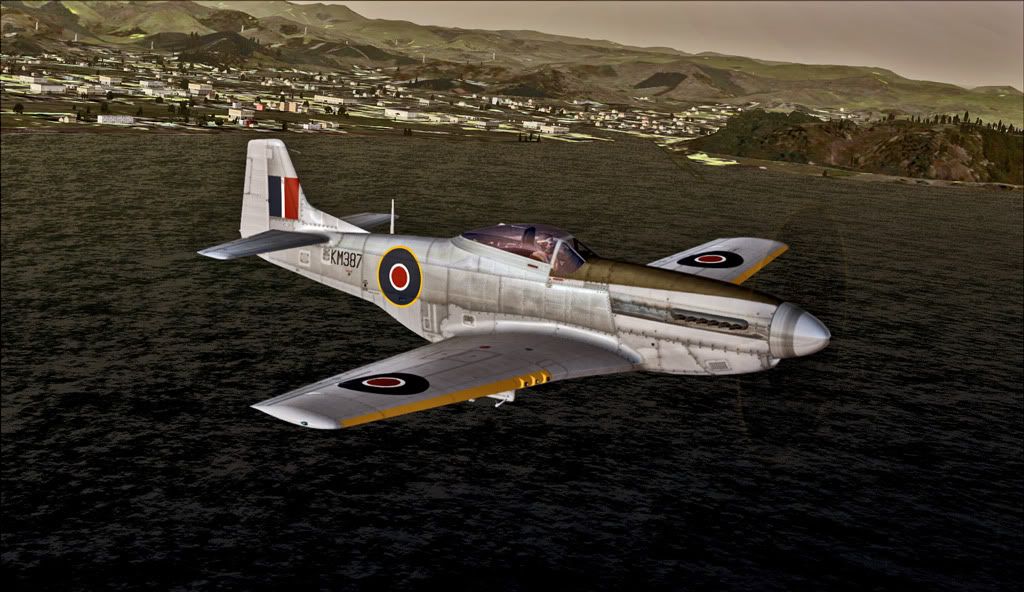
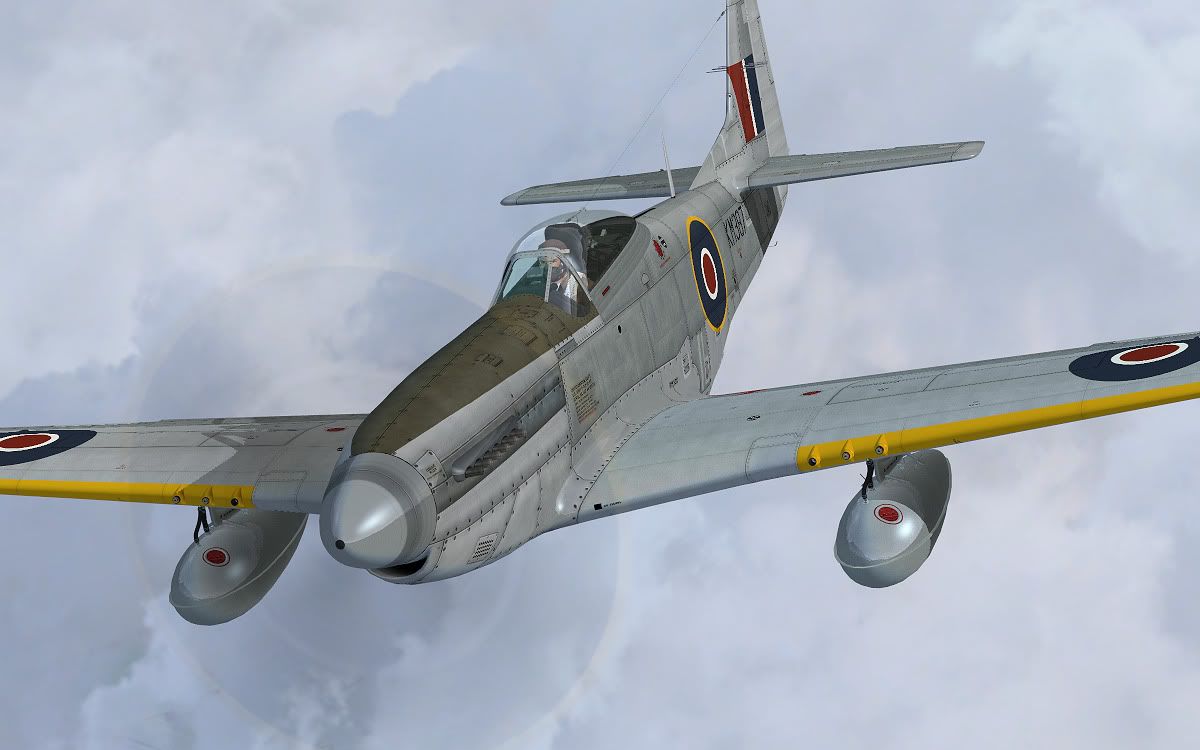
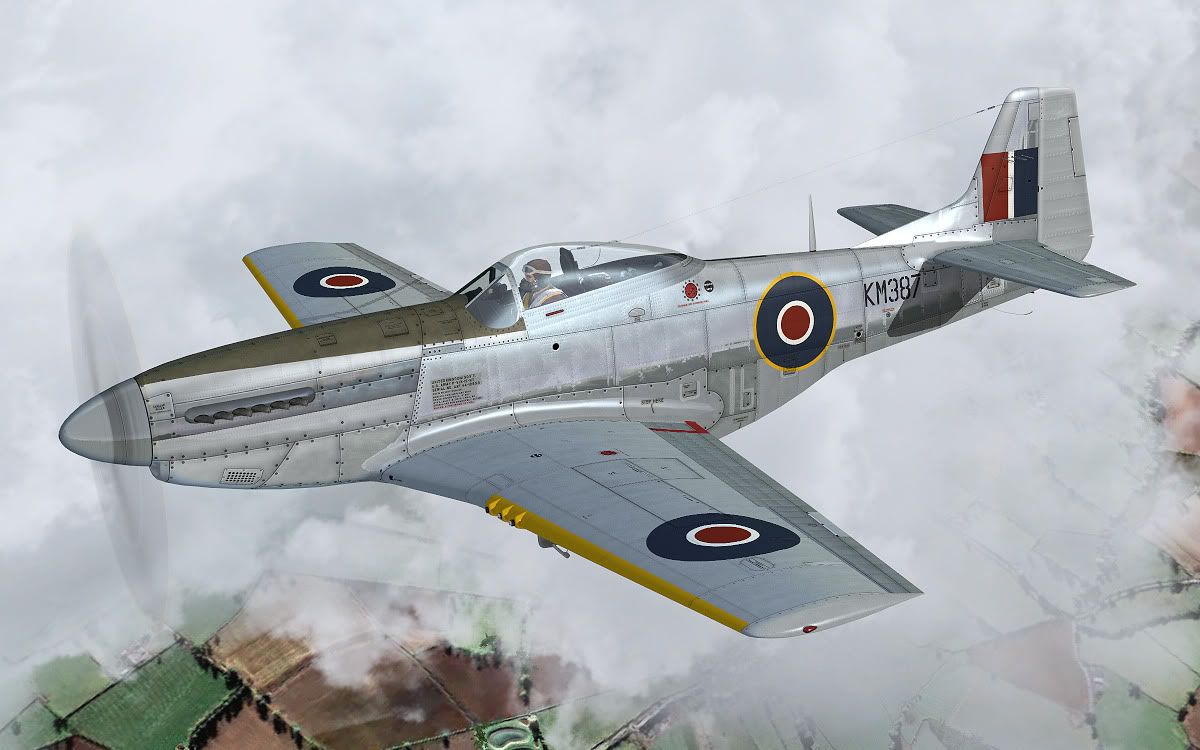
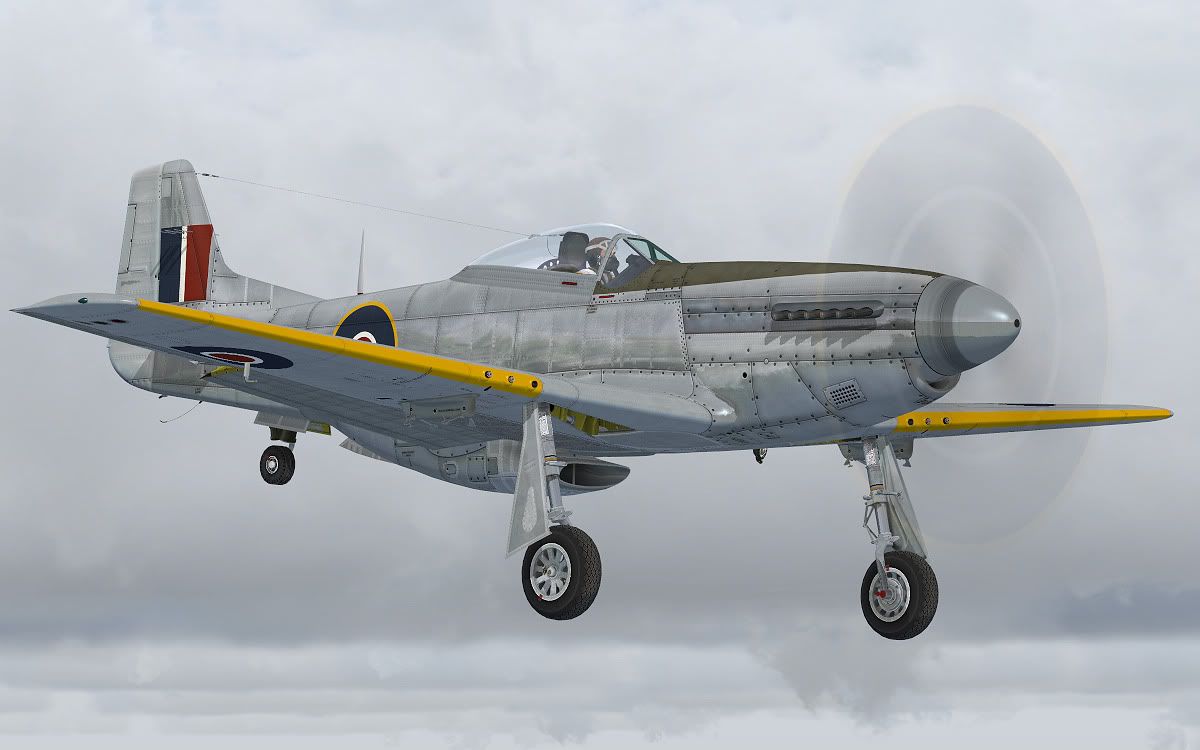
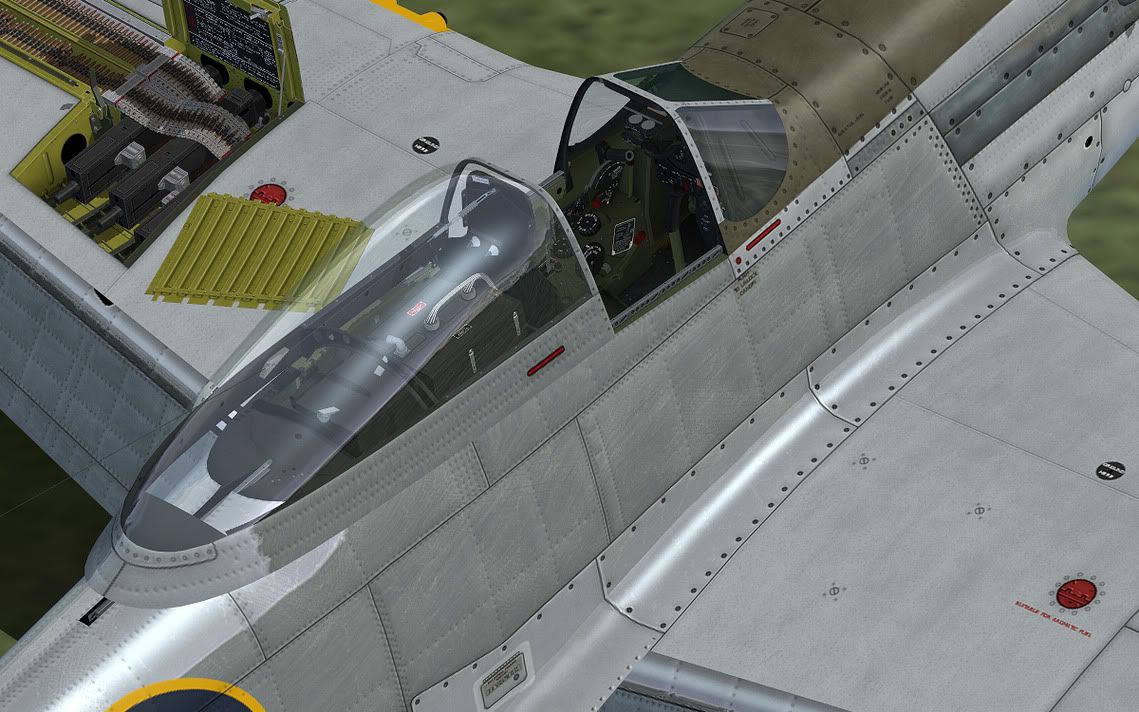
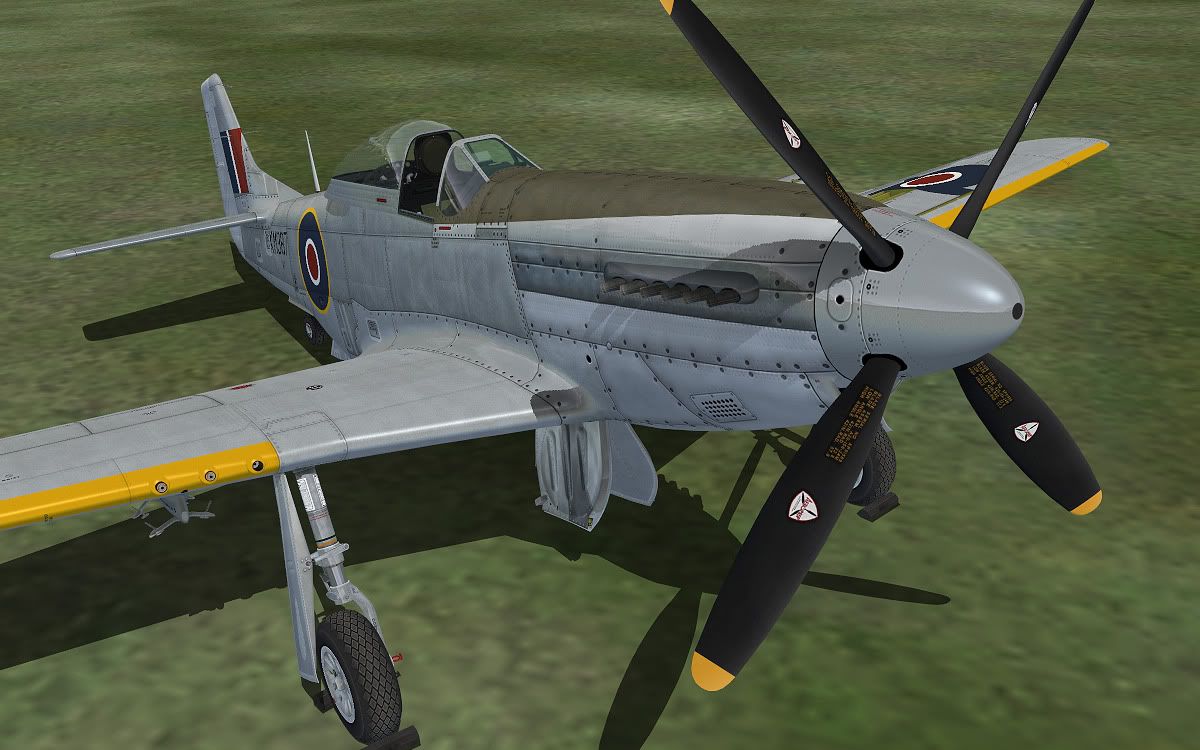
Just so that no one gets a skewed impression of what the factory fresh RAF P-51K, as included in Warbirdsim's "Little Friends", really looks like in FSX, here are just a few un-edited, straight FSX-stock screenshots, so that you can more fairly judge it by. This is by far the most 'plane-jane' variant in the product, because at the request of so many I decided to include a factory fresh example. I thought it would be unique, to not do 'yet another' stars & bars factory fresh USAAF scheme, but rather a historical, factory fresh P-51K-15-NT, as it exactly looked upon the day of completion, in 1945, at the Dallas, TX NAA plant. This variant was recreated from a photo of the actual aircraft, as it sat awaiting shipment to the docks of New Jersey, where it would eventually be shipped to the UK. It ended up serving with the RAF until 1947.
The metal finish is highly accurate to that of freshly-produced P-51D/K's in 1944/45, with variations between various panels. This would eventually dull to mostly one uniform sheen and level of reflection over the fuselage, as the aircraft became actively involved in the field of operations. The wings are of course filled, sanded, and painted silver, just as done at the factory on all Mustang production. The bright lines on various panels around the fusleage and radiator scoop, is the result of acid-etching, in which acid was simply brushed on the metal to clean it, before spot welding was done in select locations. The only thing that separated a P-51K-15-NT from a P-51D-30-NT (NT stood for Dallas-produced Mustangs), was the propeller, which instead of being a Hamilton Standard unit, was an Aeroproducts unit, that also required a different prop spinner assembly. The canopy is of the late-model 'Dallas-type', which had a much more slick-back design than the more common 'Inglewood-type'.
 Posted: Sat Jul 09, 2011 1:21 pm