OK, this is where it gets tricky, for me anyway. I know nothing about using Steam, nor what OS you have -Win7, Win 10, Mac etc. All I can do is show you how the file structures look on my Win10 flying machine.
There are some basic rules, but AFS2 is very tolerant of variations within those rules. This leads to a lot of confusion as those few devs who do provide readme instructions seem to be giving conflicting advice.
First of all, bring your AFS2 up to date (Steam should have done this for you)
Updates for AFS2 DVD installs can be downloaded here:
https://www.aerofly.com/support/downloads/These are cumulative updates i.e. each one includes the earlier stuff. You don't need to get them all, just the latest one.
Unzip the downloaded files. I use an empty folder named Area0 for this, so I can check the structure before I move the new stuff into AFS2.
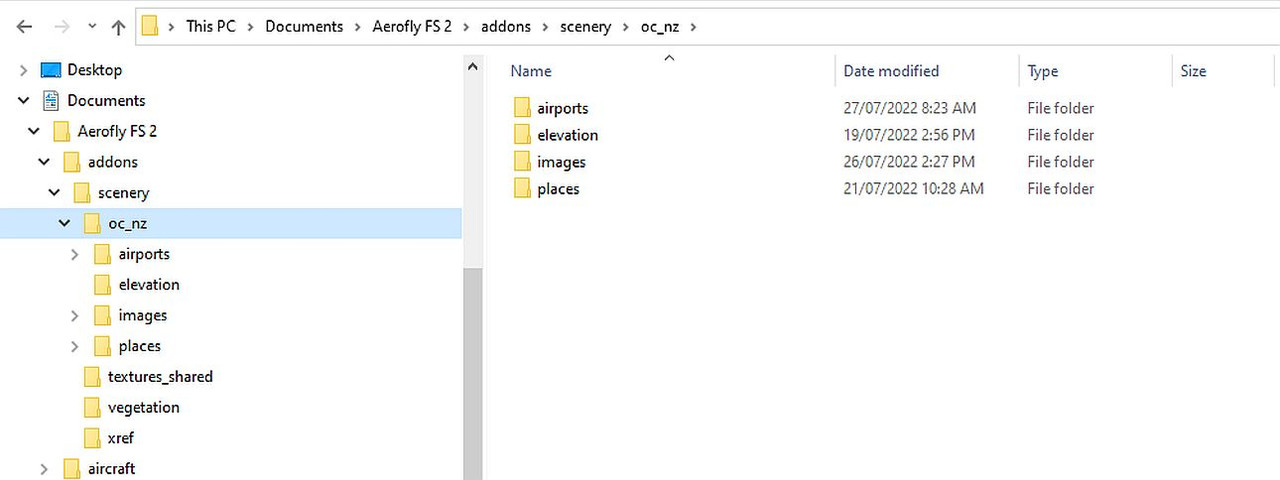
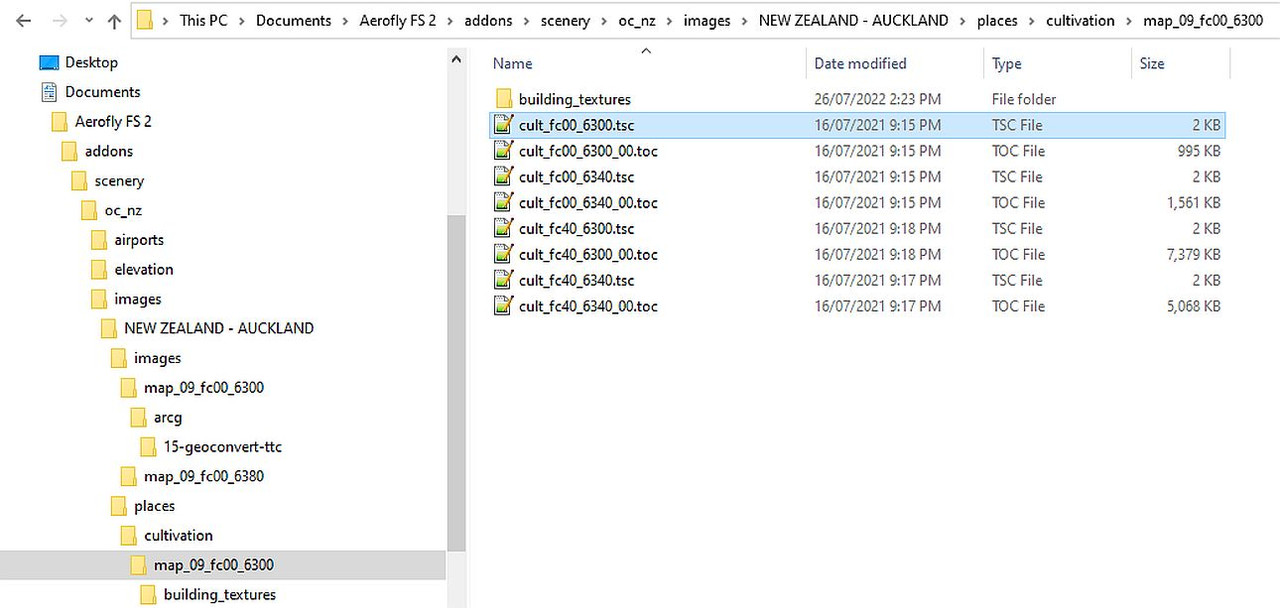
Next, remember this is third-party scenery so it goes in the Documents\AFS2 path, not the Program Files one. IZ0JUB and GeoffKiwi use slightly different methods of grouping their files, but both work.
In the images below, oc_nz is the new naming style. It used to be just nz and AFS2 loaded all the world, nomatter where you chose as a start location. Now it is oc_nz (= Oceania_NZ) which speeds up loading time because AFS2 will load just the Oceania region if you choose to start in NZ, not the whole world.
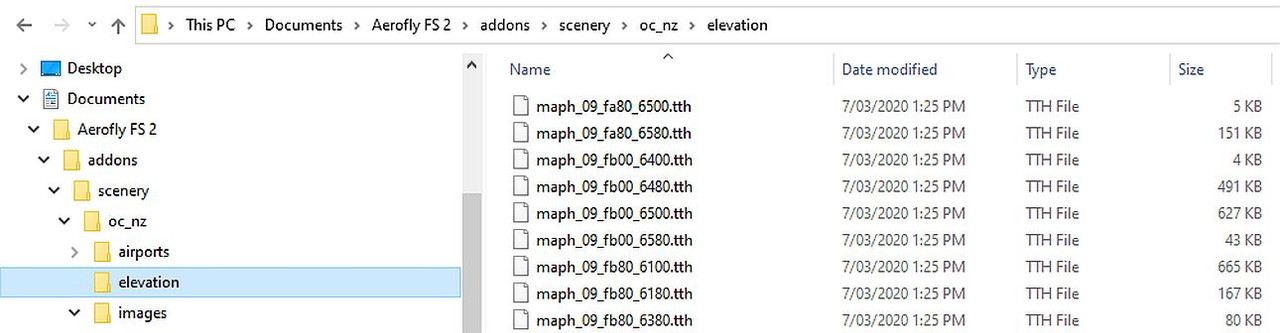
Elevation is what AFS2 calls terrain mesh and the filenames all start with maph.
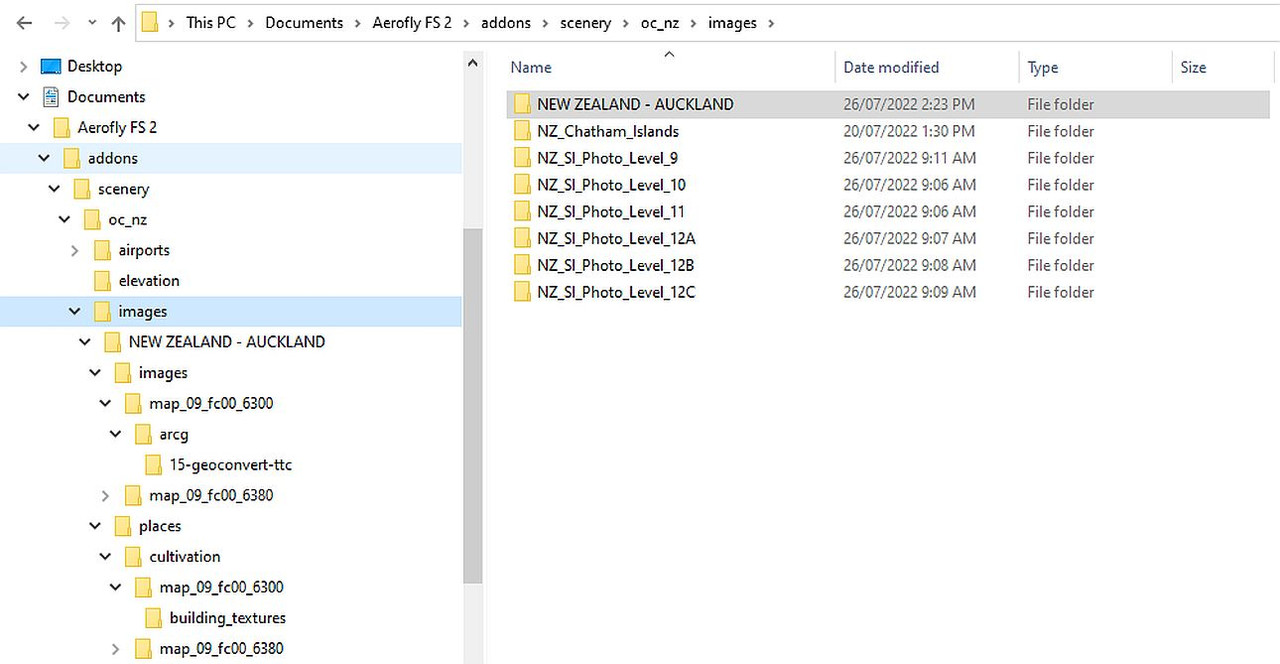
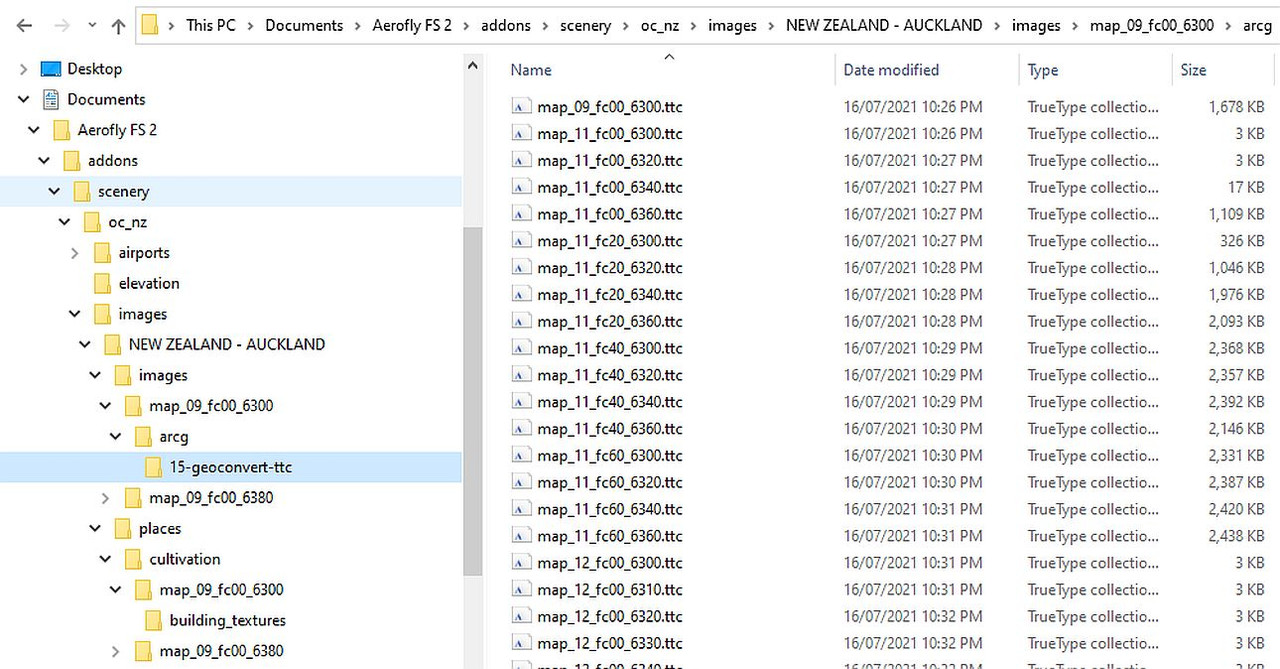
Images are what AFS2 calls photoscenery tiles and the filenames all start with map. A map_09 covers roughly 50x50 nm. A map_10 has twice the resolution so it is a quarter the size of a map_09, a map_11 is a quarter of that again, and so on up to level 15.
Cultivation (=autogen) is buildings and trees. It uses map_09 filenames which cross-reference the scenery tile they belong on. This is gradually being replaced by the xref method, which calls 3-D models from an Object Library.
 Posted: Tue Jul 26, 2022 3:23 pm
 Mike, when you have time, are you able to run me through obtaining and installing that.
