Is Flight Simming Beneficial to Real Life Training?

A place to converse about the general aspects of flight simulation in New Zealand

Postby ScottyB » Thu Jul 14, 2011 8:40 am

Hi there guys,

Hope all is well back in NZ - i'm still away up in the great north (Canada). I took this year in between completing high school and starting tertiary ed, to see a bit of the world and enjoy a year away. But next year it's back into the study, and I have decided that I am going to start pilot training at IAANZ (Canterbury Aero Club). I have some money saved up that I am going to use for a car (which I will need hwne I get home as I sold mine prior to going overseas), put towards my training, and I was think of upgrading my computer to something that can realy handle FSX. But is it worth it?

I was wondering what you all think about how beneficial a well set up computer (possibly with yokes, pedals etc), would be for my flight training? I know they use the simulators in training quite a lot, so would having one at home that I use all the time be beneficial? Obviously nothing beats flying the real thing, but for learning VFR/IFR, cockput instrument locations, beacon locations, airports, etc etc..would it help me out?

I currently have a Toshiba Satellite A500, which I run FS9 on high settings on, and it runs very well (50+ FPS). But I was thinking that I would spend appxo $2k on a new laptop and have it set up with FSX. I really want a laptop as opposed to a desktop as I will be using it for actual training, and various other needs.

So what do you think? Infact I will add a poll, but please comment with you thoughts/opinions too!

Cheers,
Scotty

New_Zealand_etc.gif
Image
User avatar
ScottyB
Sim-holic
 
Topic author
Joined: Thu Aug 30, 2007 3:58 pm
Posts: 571
Location: New Zealand

Postby gojozoom » Thu Jul 14, 2011 9:47 am

Hi Scotty,

I've been doing my PPL since 2010, and FSX actually helped a lot. I just list a couple of things I found to be extremely useful:

1.) Communication - Flying on Vatsim, with live ATC made me feel comfortable with the communications in the real-world cockpit.
2.) Flight planning - At least 100 flights a year on FSX helped me gaining a routine with flight planning.
3.) VFR navigation - VLC and Rob's photoreal sceneries provide a real VFR experience on FSX. When I do a flight in real life, I fly the route in FSX first, so I can familiarize myself with the environment and the navigational aids, etc. However those addon sceneries are an absolute must for that.
4.) Aircraft familiarization - I had the chance the learn the systems of a specific aircraft. When I had my first chance to fly a PA-28, I knew where to find things for the first time. The instructor was rather surprised smile.gif

And the list goes on and on.

However, I have to add one VERY IMPORTANT ADVICE! It's very easy to get into the never-ending story of buying add-ons, hardware, upgrading, etc. If you're planning to fly in real world, make sure that you spend your money on the real world hours, and not on simulation!!!

In my opinion, the basic simming pack includes the following (that's what I have, and I'm totally happy with it):

- A decent PC - around $2000
- FSX gold - around $60
- Joystick (Logitech 3D Xtreme) - $80-100
- Rudder pedals (Saitek) - around $200

That's all you need, don't get lost in the tempting world of TripleHeadToGo, TrackIR, and home cockpit building!
If you're lucky enough to be a real world aviator, then simulation can only be a supportive tool for your training, nothing more.

I wish you the best with your studies, and have a good time in Canada. You should talk to some bush pilots there smile.gif

Dan
Last edited by gojozoom on Thu Jul 14, 2011 9:48 am, edited 1 time in total.
Image
User avatar
gojozoom
Sim-holic
 
Joined: Fri Dec 21, 2007 10:37 am
Posts: 947
Location: Wellington

Postby SeanTK » Thu Jul 14, 2011 11:26 am

Speaking as someone who holds an FAA Private certificate, along with an Instrument rating and complex endorsement, I can say that a Flight Simulator such as FS2004 or FSX can greatly benefit you in SOME aspects of your training.
The ultra precise phraseology of the default ATC assisted me in learning proper radio communication for example.
Additionally, since the vast majority of frequencies, navaids, and navaid locations are the same in FS and the real world, it has helped me much with my Instrument training, and I would say that this is where FS usage benefits the most.

In regard to VFR flight, while some scenery areas can certainly help, an issue I had when flying in the real world was that I was not looking outside enough. I had my "head down" on the instruments too often while doing VFR flight in the real world. Keep in mind when you start your training that, while the instruments are obviously important, you need to keep your head on a swivel when flying in the VFR system. The FS program relies so much on having your head down in the cockpit that you may find this as an aspect that you need to conquer.

Keeping the scenery aspect in mind, your lucky to be training in New Zealand since we have VLC for FSX available.
When you plan cross-country trips for your training requirements, you can fly your planned route on the simulator prior to doing it in the real thing. I did this when I was undergoing my training, and it really helped me know what to look out for regarding visual references and what my general sight picture will look like over various phases of my trip.

Beyond that, learning the systems of basic aircraft in the sim came in handy, but the real things have so many differences and idiosyncrasies that you need to be cautious when relating your sim experiences to a real cockpit.
Also, pay no attention to how accurately a developer claims their aircraft flies. (Flight dynamics) The real thing will be pretty different. Hard to explain, in that you'll likely be using the same reference speeds, but flying will just feel...different, due to the availability of more of your senses. (seat of the pants feeling...)

Other factors:
The sim can safely show you the effects of weight and balance and the center of gravity on your aeroplane. Consequences of having the CG too far forward or aft, etc.
As mentioned, the sim is a wonderful thing to have for instrument training due to the accuracy of the frequencies, navaids, and the ability to perform the correct types of enroute navigation, approaches, departures, etc.

Overall, the lesson I have learned is that sim usage can be generally beneficial (especially for instrument and IFR navigation/procedure training), but that you need to be sure that you are not reinforcing any "bad habits" while using the sim that could be transferred to the real world. Always trust the word of your instructor and the real flight manuals over what you have been doing in the sim.

Do not get discouraged when you try some real landings! You'll learn all about the effects of your peripheral vision (something that you cannot use in FS!) It takes quite a bit of getting used to, but you'll get the hang of it.

Again, I would encourage simulator usage to assist you in your flight training!
Good luck! You'll have a lot of fun with it!

-SeanTK

FAA Private w/Instrument + Complex (ASEL)
Cessna 150, 172, 172RG, Flight Design CTLS
Last edited by SeanTK on Thu Jul 14, 2011 11:34 am, edited 1 time in total.
User avatar
SeanTK
Senior Member
 
Joined: Sun Feb 28, 2010 9:27 am
Posts: 1617

Postby nzav8tor » Thu Jul 14, 2011 3:57 pm

I've been flying with Flight sims through out my pilot career and I have to say it is definetley beneficial to real world flight.
We train in simulators for crying out loud!

Theres some obvious draw backs with the home setup, the biggest factor I believe is the lack of sensation of flight. Even when instrument flying you can 'feel' you are flying and your reactions are more instinctive.
In the FS world you rely almost soley on the visual picture of either outside or on the instruments so your reactions are delayed and response not as precise.
But autopilot dampens this somewhat.

Just recently I've been training to use the Garmin 430 GPS on the FSX Reality XP model as an aircraft I am flying at the moment has two of them and its been very helpful.

On Tuesday I was conducting an emergency descent exercise from FL200, 20 Nm short of the destination airport, NZPM and had setup a VOR/DME approach.
ATC suggested joining the arc rather than the overhead quite late in the descent which was a better option so I quickly set the approach up on the GPS and activated it.

The CDI didn't move to the arc course and there were a few seconds when I wondered what was going wrong as I was 2 NM from a 14 DME arc and really needed to get turning.
Then I remembered the same thing had happened on FSX and I went to the flight plan page, pressed the cursor button, scrolled to the arc segment I needed to capture and pressed menu. The activate leg option came up immediately and one more click had the aircraft turning left to intercept.

Perhaps the most direct benefit of flight sim I've ever had!
User avatar
nzav8tor
Forum Addict
 
Joined: Sat Feb 24, 2007 4:31 am
Posts: 222
Location: PN

Postby Ian Warren » Thu Jul 14, 2011 4:19 pm

I was going to add , but shows experience proves that fact , a drawn conclusion from all above , one occasion i hired a plane and was offered the controls and yes Scott (Canterbury Aero Club) , had a mate in the back and Mark the CAC instructor asked how many hours , a few but not official , Ole Ruben in the back , many thousands on the PC , I flew it like been doing it for years , another reason why i have no hesitation spending many hours helping with Real New Zealand photo real and many other FS projects .

Dave aka 'nzav8tor' sent me some regional covering the top and the bottom off the North Island- VFR low alt maps , to be scanned and posted but also have many world Nav also from Craig aka 'Towerguy' which would really help many , course not for real world navigation but a good home training tool .

We will get there with the maps and information , .. biggest thing is that it really works as a training tool and for the share fun off it .
Image
User avatar
Ian Warren
NZFF Pro
 
Joined: Fri May 05, 2006 5:23 pm
Posts: 41187
Location: AREA 51

Postby Aztec » Thu Jul 14, 2011 4:50 pm

whathesaid.gif

There's not much I can add that everyone else hasn't already said. You'll hear varied responses regarding using FS as a training tool but I generally find that the neighsayers have never tried it, or got past an out-of-the-box installation. FS is great for a sophisticated version of "chair flying"; you can practice checklists, radio procedures, and if you're using the same sort of aircraft you're flying in RL it can provid some very positive reinforcement. For example, I recently did an endorsement on a Twin Comanche and after the basic endorsement I could go home and consolidate on the ESDG version. I found this an excellent way to memorise speeds, power settings, configurations etc. As for IFR, I find FS great for revising procedures. Until recently I hadn't renewed my instrument rating for nearly 10 years (not a lot of bad weather here!), but I found when I started flying IF again my basic instrument skills were pretty reasonable thanks to plenty of time spent on FS.
One small word of caution - one thing I have noticed over the years is that given flying in FS has no physical consequences, this can lead to a false sense of security and may allow complacency to filter through to your RL flying. I find this is true especially if the amount of flying you do on FS greatly outweighs your real-world hours. Be disciplined about your checks and take your time.

Happy Flying plane.gif

Az

PS May I add I love the emoticons here!
Last edited by Aztec on Thu Jul 14, 2011 4:54 pm, edited 1 time in total.
Aztec
Member
 
Joined: Tue Jun 21, 2011 3:42 pm
Posts: 40
Location: Orstrailya

Postby Ian Warren » Thu Jul 14, 2011 4:57 pm

Aztec wrote:
QUOTE (Aztec @ Jul 14 2011,5:50 PM) <{POST_SNAPBACK}>
One small word of caution - one thing I have noticed over the years is that given flying in FS has no physical consequences, this can lead to a false sense of security and may allow complacency to filter through to your RL flying.

biggrin.gif Yip , forgot mention that , and another ... No chance off killing yourself (no physical consequences) and sure hell a bloody lot cheaper laugh.gif
Image
User avatar
Ian Warren
NZFF Pro
 
Joined: Fri May 05, 2006 5:23 pm
Posts: 41187
Location: AREA 51

Postby benwynn » Thu Jul 14, 2011 5:01 pm

I'd definitely agree with SeanTK, it can certainly assist some aspects of your training. Ab initio, probably harms your training. Fixating on instruments etc is certainly a common mistake with anybody who's used FS before- as its really all you've got. What I do find it helpful for, is emergency training (FLWOP etc, learning the checks) as well as IFR flying. Personally, I wouldn't spend any additional money on what you already have, as it really does nothing towards hands on flying.

Also, bare in mind if you wish to obtain the Student Loan for ALL flying towards CPL, you need to start before next year. If just doing your PPL, not to worry.
User avatar
benwynn
Senior Member
 
Joined: Wed Apr 11, 2007 9:11 pm
Posts: 1433
Location: YBBN

Postby cowpatz » Thu Jul 14, 2011 5:25 pm

As I fly glass in the real world I do find FS useful to stay in touch with analogue instrumentation, the Litton INS and the more traditional ground based navigation aids. Great for getting the instrument scan going and maintaining situational awareness when using just the basics (Well not quite the basics as I prefer an RMI as a minimum and preferably an HSI as well although in anger I will use a fixed card ADF).
Remember the 50-50-90 rule. Anytime you have a 50-50 chance of getting something right, there's a 90% probability you'll get it wrong!

Image
User avatar
cowpatz
NZFF Pro
 
Joined: Wed Mar 07, 2007 3:28 pm
Posts: 3747

Postby nzav8tor » Thu Jul 14, 2011 5:29 pm

Fixed card ADF... <shudder>
User avatar
nzav8tor
Forum Addict
 
Joined: Sat Feb 24, 2007 4:31 am
Posts: 222
Location: PN

Postby Aztec » Thu Jul 14, 2011 6:24 pm

QUOTE
Fixed card ADF... <shudder>[/quote] laugh.gif Some of you blokes have got it too good!

I remember getting in an older Warrior a few years ago and the ADF was one of those old jobbies you had to tune in like an AM radio - needless to say it didn't get used a lot that trip.

On the opposite end to Cowpatz, most of my flying is on steam gauges, so I found it useful to use FS to get my head around the glass, particularly the tape presentation; the ESDG Twinstar, PMDG 737 and Lionheart Kodiak are good for this (plus the Kodiak is a heap of fun!). The Twin Comanche I mentioned earlier has an Aspen EFD; I had to put post- it notes over the mechanical ASI/Alt/VSI to force mysylef to use the EFD!
Aztec
Member
 
Joined: Tue Jun 21, 2011 3:42 pm
Posts: 40
Location: Orstrailya

Postby cowpatz » Thu Jul 14, 2011 6:43 pm

Twin Commanche <shudder> smile.gif
Last edited by cowpatz on Thu Jul 14, 2011 6:43 pm, edited 1 time in total.
Remember the 50-50-90 rule. Anytime you have a 50-50 chance of getting something right, there's a 90% probability you'll get it wrong!

Image
User avatar
cowpatz
NZFF Pro
 
Joined: Wed Mar 07, 2007 3:28 pm
Posts: 3747

Postby morrisman1 » Thu Jul 14, 2011 10:45 pm

Ill start with a conclusion then explain why.

~~~ Flight simming is only any use for procedural training. Flying ability benefit is near on zilch.

Here is why I have that opinion. Flight Simulator is damn close to completely useless a simulating the flying experience. It may be "As real as it gets" but I think they are referring to the fuel pump switch when they made that statement. You can become a flight simulator ace then get in a real plane and be even worse than someone who has had absolutely no experience and the vice versa applies, you can be a flying ace but be rubbish when put in a simulator like Microsoft flight simulator. Everything from the sense of speed, feel of the control forces (even with force feedback), trimming the elevator forces, engine behaviour, feeling the effect of flaps, stalling, slow flight, all of the above are not simulated in FSX in any way that is beneficial to real world flying. There is no substitute for having your bum in the aircraft for flying ability.

The flip side of the coin is the procedural aspect of operating an aircraft. Flight simulator is not perfect because not everything can be simulated (yea I know you disagree PMDG) in this version of MSFS but as far as procedural flying goes it is pretty good. Most addon aircraft allow you to operate the aircraft in a manner in which the manufacturer intended. park brake off, undercarriage down, mixtures rich, fuel pump on, ignition set both, landing light on and seat belts fastened. You can run through all the checklists that you should in flight and practice remembering them. That aspect can help. And then theres IFR flight and thats where FSX really excels. It is pretty damn good at allowing 'by-the-book' IFR flight with the exception of a few changed frequencies and unrealistic range of the Nav Aids it allows students in instrument training to go home and make sure they can perform a parallel entry to the NDB holding pattern that they didn't master in the plane or perhaps getting the plane set up nice and early for a VOR/DME approach in crappy conditions.

Any aspect of flight simulator that is used with the intention of improving real world performance MUST, and I stress MUST be taught correctly and be understood by the student before they go embark on their own practice in the simulator. The simulator will be counter productive if the student is not practicing the procedures correctly or hasn't been shown the correct way in the first place. If you dont know how to perform the procedure correctly then dont practice it at all, all you will end up is creating bad habits that will inevitably have to be fixed in the air and we all should be aware of how expensive it is to keep that seat airborne.

So to summarise, and remember this is my opinion - there is no right or wrong, the simulator is only good for procedural practice once the student knows how to do the procedure in the first place and just needs practice. For any other purposes and that includes hand flying and performing yet-to-be-taught procedures then treat it as a GAME and purely for entertainment purposes.
Last edited by morrisman1 on Thu Jul 14, 2011 10:49 pm, edited 1 time in total.
Cameron Morison
CAA CPL(A), MEIR

FSX Acceleration on windows 7 64bit, Gigabyte P55a-UD3R i5-750, 4GB DDR3, HD5850 1GB (and still sucky frames - thanks fsx!)
User avatar
morrisman1
Member
 
Joined: Wed Jan 27, 2010 6:24 pm
Posts: 87

Postby Timmo » Fri Jul 15, 2011 9:25 am

The pros and cons have been listed here already so I won't reiterate too much apart from saying I wrote an article for the VLC site for this very question smile.gif

To summarise my opinion: Yes it is beneficial but it is in no way a replacement for real world flying experience.

Check it out: http://vectorlandclass.co.nz/index.php?opt...atid=31:general
Timmo
NZFF Pro
 
Joined: Wed Oct 25, 2006 6:28 pm
Posts: 2056
Location: Tauranga

Postby ScottyB » Fri Jul 15, 2011 11:14 am

benwynn wrote:
QUOTE (benwynn @ Jul 14 2011,6:01 PM) <{POST_SNAPBACK}>
Also, bare in mind if you wish to obtain the Student Loan for ALL flying towards CPL, you need to start before next year. If just doing your PPL, not to worry.


Really!? Oh goodness, I didn't know that. I was planning on starting next year! Wow. Um.....I may be coming home a bit early from Canada!! sad.gif
Image
User avatar
ScottyB
Sim-holic
 
Topic author
Joined: Thu Aug 30, 2007 3:58 pm
Posts: 571
Location: New Zealand

Postby benwynn » Sun Jul 17, 2011 8:51 am

Yeah, Key Government is only going to provide funding for Dual Hours and classroom instruction. If you do want to start before these rules come in, the last intake for the year at the IAANZ is in October I think.
User avatar
benwynn
Senior Member
 
Joined: Wed Apr 11, 2007 9:11 pm
Posts: 1433
Location: YBBN

Postby Syncop8r » Sun Jul 17, 2011 10:04 am

I agree with pretty much everything everyone has already said, particularly in regard to instrument fixation, IFR, lack of sensation. I used flightsim a little when I was learning circuits in the real world and it helped there (although I tend to skimp on some of the switch flicking on FS), but I haven't used it much since. However, now that I am doing IF training I need to revise and for this I think FS is great as I'm only looking at the instruments anyway which is no different to (maybe even better than) some of the sims at school. I have FS9 and a cheap twist-rudder joystick but they're fine as I'm not so worried about how real the flying of the plane is, rather how to interpret the instruments and fly off them. I wouldn't upgrade from this just to enhance real-world flying traing.
Last edited by Syncop8r on Sun Jul 17, 2011 10:13 am, edited 1 time in total.
Syncop8r
Forum Addict
 
Joined: Sun Nov 11, 2007 11:28 pm
Posts: 206

Postby ScottyB » Sun Jul 17, 2011 10:43 am

benwynn wrote:
QUOTE (benwynn @ Jul 17 2011,8:51 AM) <{POST_SNAPBACK}>
Yeah, Key Government is only going to provide funding for Dual Hours and classroom instruction. If you do want to start before these rules come in, the last intake for the year at the IAANZ is in October I think.


What % of the course is solo hours? Because I am looking at doing the big course, which covers PPL, CPL, Instrument ratings, ATPL etc etc. I think I have heard it costs around $80,000 all up. How much of that would be solo that I would have to fork out myselft?
Image
User avatar
ScottyB
Sim-holic
 
Topic author
Joined: Thu Aug 30, 2007 3:58 pm
Posts: 571
Location: New Zealand

Postby modestmoo » Sun Jul 17, 2011 1:09 pm

ScottyB wrote:
QUOTE (ScottyB @ Jul 17 2011,10:43 AM) <{POST_SNAPBACK}>
What % of the course is solo hours? Because I am looking at doing the big course, which covers PPL, CPL, Instrument ratings, ATPL etc etc. I think I have heard it costs around $80,000 all up. How much of that would be solo that I would have to fork out myselft?


The main course at IAANZ is the PPL icon_arrow.gif CPL with the MEIR - in that course you end up with at least 100 hours PIC (solo), most finish the course with about 220 hours total. The total course cost is roughly $80,000 (I think mines just under). The cost to hire a plane solo starts at $170 for a Tomahawk up to $220 for a Archer. To be honest, I reckon it would have been better if the government made you pay for all of your PPL dual and solo flying, and the student loan covered all the costs of going from a PPL to CPL.
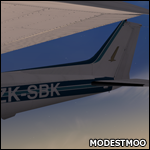
Instructor Ratings are also becoming self funded - nice that halfway through completing your course the government decides its not funding the second year anymore. smile.gif
User avatar
modestmoo
Member
 
Joined: Sun Apr 03, 2011 7:59 pm
Posts: 11

Postby ScottyB » Sun Jul 17, 2011 2:28 pm

modestmoo wrote:
QUOTE (modestmoo @ Jul 17 2011,2:09 PM) <{POST_SNAPBACK}>
The main course at IAANZ is the PPL icon_arrow.gif CPL with the MEIR - in that course you end up with at least 100 hours PIC (solo), most finish the course with about 220 hours total. The total course cost is roughly $80,000 (I think mines just under). The cost to hire a plane solo starts at $170 for a Tomahawk up to $220 for a Archer. To be honest, I reckon it would have been better if the government made you pay for all of your PPL dual and solo flying, and the student loan covered all the costs of going from a PPL to CPL.

Instructor Ratings are also becoming self funded - nice that halfway through completing your course the government decides its not funding the second year anymore. smile.gif


If you have already started training, you will be funded throughtout the duration of it. That's why I am looking to start as soon as I can!
Image
User avatar
ScottyB
Sim-holic
 
Topic author
Joined: Thu Aug 30, 2007 3:58 pm
Posts: 571
Location: New Zealand

Next

Return to General

Who is online

Users browsing this forum: No registered users and 8 guests