Space History
Re: Space History
 by chopper_nut » Tue Apr 07, 2015 10:43 am
-

chopper_nut - NZFF Pro
- Topic author
- Joined: Wed Oct 25, 2006 9:58 pm
- Posts: 2978
- Location: Wherever the work is
Re: Space History
by chopper_nut » Thu Apr 09, 2015 2:06 pm
A really interesting 'show and tell' on the 40th anniversary of Apollo 15. The banter between Al Worden and Dick Gordon is excellent.
-
chopper_nut - NZFF Pro
- Topic author
- Joined: Wed Oct 25, 2006 9:58 pm
- Posts: 2978
- Location: Wherever the work is
Re: Space History
by Ian Warren » Thu Apr 09, 2015 2:17 pm

-

Ian Warren - NZFF Pro
- Joined: Fri May 05, 2006 5:23 pm
- Posts: 41187
- Location: AREA 51
Re: Space History
by chopper_nut » Thu Apr 09, 2015 10:40 pm
-
chopper_nut - NZFF Pro
- Topic author
- Joined: Wed Oct 25, 2006 9:58 pm
- Posts: 2978
- Location: Wherever the work is
Re: Space History
by chopper_nut » Wed May 06, 2015 8:35 am


-
chopper_nut - NZFF Pro
- Topic author
- Joined: Wed Oct 25, 2006 9:58 pm
- Posts: 2978
- Location: Wherever the work is
Re: Space History
by Ian Warren » Wed May 06, 2015 8:58 am
-
Ian Warren - NZFF Pro
- Joined: Fri May 05, 2006 5:23 pm
- Posts: 41187
- Location: AREA 51
Re: Space History
by chopper_nut » Wed May 06, 2015 12:17 pm
-
chopper_nut - NZFF Pro
- Topic author
- Joined: Wed Oct 25, 2006 9:58 pm
- Posts: 2978
- Location: Wherever the work is
Re: Space History
by Ian Warren » Wed May 06, 2015 12:49 pm
 , love the chatter , been so long since , but so much clearer .. SUPERB
-
Ian Warren - NZFF Pro
- Joined: Fri May 05, 2006 5:23 pm
- Posts: 41187
- Location: AREA 51
 Great post Nick.
Re: Space History
by Ian Warren » Sun May 24, 2015 1:45 pm
-
Ian Warren - NZFF Pro
- Joined: Fri May 05, 2006 5:23 pm
- Posts: 41187
- Location: AREA 51
Re: Space History
by chopper_nut » Thu Dec 03, 2015 10:59 pm
 Watch on youtube.com
-
chopper_nut - NZFF Pro
- Topic author
- Joined: Wed Oct 25, 2006 9:58 pm
- Posts: 2978
- Location: Wherever the work is
Re: Space History
by Ian Warren » Sun Jan 31, 2016 6:16 pm
-
Ian Warren - NZFF Pro
- Joined: Fri May 05, 2006 5:23 pm
- Posts: 41187
- Location: AREA 51
Re: Space History
by chopper_nut » Sat Feb 06, 2016 2:37 pm
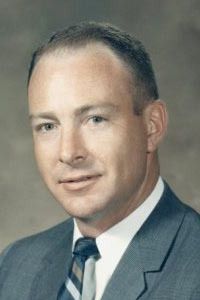
In the midst of the anniversary of Apollo 14, another of the astronaut corps has departed for the big beach house in the sky. Ed Mitchell joined NASA in 1966 as part of the 5th group of astronauts and served as backup LMP for Gene Cernan on Apollo 10. He was then assigned as the LMP for Apollo 14 alongside CDR Al Shepard and CMP Stu Roosa.
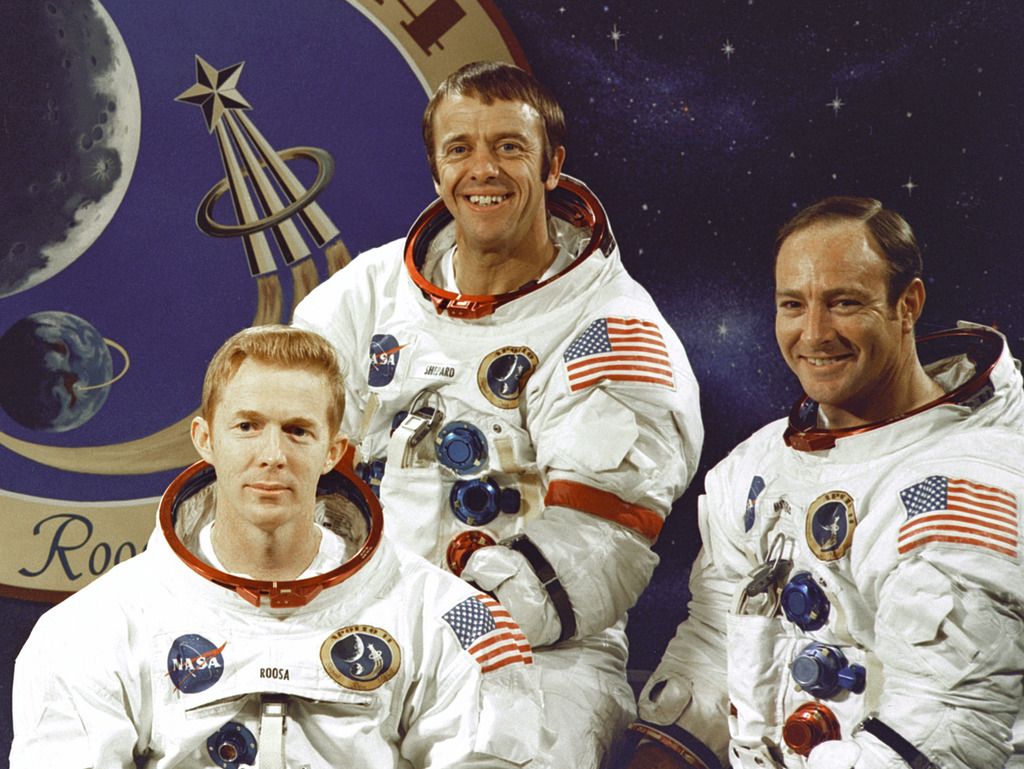
Left to right: Stu Roosa, Al Shepard, Ed Mitchell
Apollo 14 launched into a low overcast on 31-1-71 and was inserted into a satisfactory parking orbit. Following TLI a few hours later, the flight ran into problems during transposition and docking when the latches on the probe wouldn't lock into the drogue on the Lunar Module. It took an hour and fourteen minutes of repeated attempts and head scratching before the latches engaged.
Upon arriving in lunar orbit, a normal undocking occurred much to everyone's relief. This was short lived however when an erroneous 'Abort' command was set in the computer by what was suspected to be a loose ball of solder behind a panel in the spacecraft. After more head scratching, the instrumentation lab at MIT, who had designed and programmed the AGC (Apollo Guidance Computer), came up with a solution that involved tricking the computer into thinking it was already in the abort mode and therefor would ignore the abort switch. The fix worked and soon, the lunar module Antares commenced its PDI burn.
Another problem came up when the landing radar wouldn't lock on to the surface. The landing radar was a critical piece of equipment and according to mission rules, the landing would be aborted if a lock was not achieved by 18000ft. The work around for the abort switch had had the unintended effect of locking the radar up at infinity. A quick reset of the circuit breaker allowed the radar to lock and after a 'Go' from mission control, computer program P64 was initiated.
Antares touched the surface of the Fra Mauro highlands at 09:18:11 UTC on 5-2-71. Shepard and Mitchell conducted two EVAs lasting a total of nine hours and twenty two minutes, almost two hours longer than the previous EVAs on Apollo 12. Nearly 43kg of lunar samples were collected and the MET (Modular Equipment Transporter; a kind of cart) was used to transport experiments further than before.
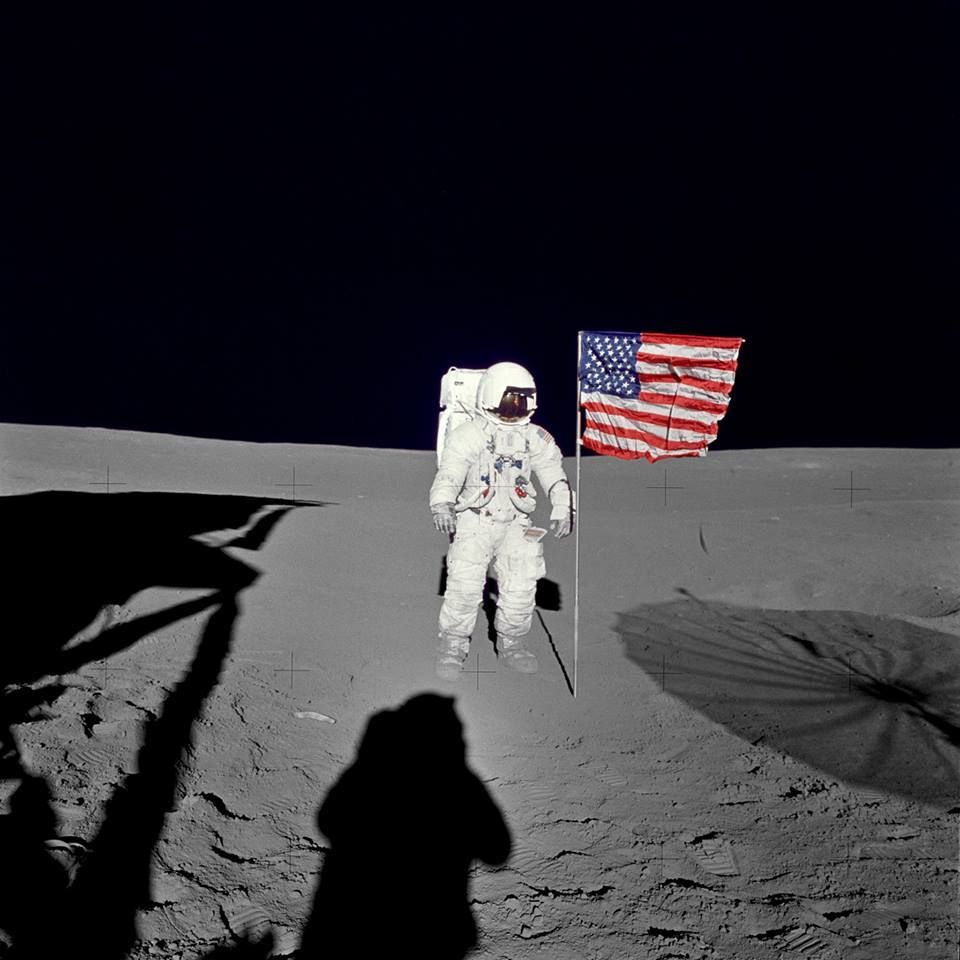
Mitchell on the surface with the flag.
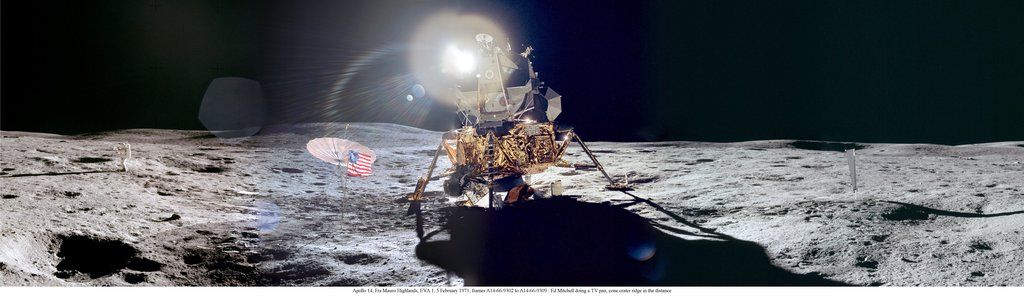
The most memorable moment in the flight came when, on live TV, Shepard screwed a six iron golf club head onto the lunar excavation tool handle and took a swing at a couple of golf balls that had been brought along. The bulky suit hampered his swing somewhat but on the second try he connected. "Miles and miles" he exclaimed.
After a successful liftoff, rendezvous and journey home, the command module splashed down 760nm South of PagoPago and the spacecraft and crew were picked up by the USS New Orleans.
After the flight, Shepard returned to the astronaut office for the remainder of the Apollo program and retired from the Navy and NASA in 1974. Alan Shepard died of leukemia in 1998. Stu Roosa, stayed with the program until 1976 when he entered private industry. Roosa died from complications arising from pancreatitis in late 1994. Mitchell retired from the NAVY and NASA in 1972. Afterwards he actually became active in the UFO community, expressing his beliefs that extra terrestrials have visited earth. He also remained in contact with his former colleagues, attending various gatherings and public speaking events.
Ed Mitchells passing means that Apollo 14 is the first Apollo flight to loose all three of its crew. It is a sad fact that with the passing years, fewer and fewer of these giants of aviation and engineering survive. It's important to take note and appreciate these people now for the day will come when there will be nobody alive who has walked on or even flown to the moon.

Capt Edgar Dean Mitchell (USN RET) B 17-09-30 D 04-02-16
-
chopper_nut - NZFF Pro
- Topic author
- Joined: Wed Oct 25, 2006 9:58 pm
- Posts: 2978
- Location: Wherever the work is
Re: Space History
by Splitpin » Sat Feb 06, 2016 4:23 pm
-

Splitpin - NZFF Pro
- Joined: Mon Aug 03, 2009 12:15 pm
- Posts: 21381
- Location: Christchurch NZ
Re: Space History
by chopper_nut » Sun Feb 07, 2016 1:26 pm
-
chopper_nut - NZFF Pro
- Topic author
- Joined: Wed Oct 25, 2006 9:58 pm
- Posts: 2978
- Location: Wherever the work is
Re: Space History
by Ian Warren » Sun Feb 07, 2016 2:02 pm
-
Ian Warren - NZFF Pro
- Joined: Fri May 05, 2006 5:23 pm
- Posts: 41187
- Location: AREA 51
Re: Space History
by chopper_nut » Sun Feb 07, 2016 5:01 pm
-
chopper_nut - NZFF Pro
- Topic author
- Joined: Wed Oct 25, 2006 9:58 pm
- Posts: 2978
- Location: Wherever the work is
Re: Space History
by Ian Warren » Sun Feb 07, 2016 5:27 pm
-
Ian Warren - NZFF Pro
- Joined: Fri May 05, 2006 5:23 pm
- Posts: 41187
- Location: AREA 51
Who is online
Users browsing this forum: No registered users and 11 guests