Shalom and greetings all my pals,
I have accomplished successful installation of NZWN Wellington airport scenery along with its city landscape and all realistic photoreal ground textures stuff for this airport and city. The freeware NZWN features accurate gates, gate ground markings, taxiway markings, cool hangars with names, etc etc.
Unless I am mistaken, I understand that Wellington airport is one of official bases for RNZAF's 757s. If I am correct, can anyone please tell me the Wellington airport's accurate parking locations for RNZAF 757s, please?
Also, what were official NZWN gates for Air New Zealand 767s and DC-8s and for Qantas 747SP, please? I heard that at this moment, some airline is using 777 for Wellington airport. What gate would that be for 777, too please?
Thanks,
Aharon
Parking Spots For Wellington Airport Please
8 posts
• Page 1 of 1
Parking Spots For Wellington Airport Please
 by Aharon » Thu Mar 07, 2019 3:05 am
- Aharon
- NZFF Pro
- Topic author
- Joined: Sun Jul 23, 2017 11:39 am
- Posts: 2042
Re: Parking Spots For Wellington Airport Please
by NZ255 » Thu Mar 07, 2019 7:25 am
G’day.
The 757 does make regular stops in Wellington, but I’m not sure if it’s a base. There is an RNZAF hanger and logistics centre at the South end of the Western apron. The 757 and C130 park outside it.
Not sure where the 767 and 747 used to park, but the heavy gates are 23 and 26.
The singapore 777-200 parks at gate 26 and gets pushed back to taxiway Alpha.
Nick
The 757 does make regular stops in Wellington, but I’m not sure if it’s a base. There is an RNZAF hanger and logistics centre at the South end of the Western apron. The 757 and C130 park outside it.
Not sure where the 767 and 747 used to park, but the heavy gates are 23 and 26.
The singapore 777-200 parks at gate 26 and gets pushed back to taxiway Alpha.
Nick
Nick
-

NZ255 - NZFF Pro
- Joined: Wed Jun 20, 2007 12:57 pm
- Posts: 2475
Re: Parking Spots For Wellington Airport Please
by Aharon » Fri Mar 08, 2019 2:25 am
NZ255,
Thanks for answers.
Got to find south end of western apron of NZWN in FSX!!!
Anybody knows what gates 747SPs, DC-8s, and 767s used to park at, please?
Assuming that NZWN gets lots of cargo flights such as DHL or FedEx or local cargo airlines, where do they unload or load cargo goods, please?
Regards,
Aharon
Thanks for answers.
Got to find south end of western apron of NZWN in FSX!!!
Anybody knows what gates 747SPs, DC-8s, and 767s used to park at, please?
Assuming that NZWN gets lots of cargo flights such as DHL or FedEx or local cargo airlines, where do they unload or load cargo goods, please?
Regards,
Aharon
- Aharon
- NZFF Pro
- Topic author
- Joined: Sun Jul 23, 2017 11:39 am
- Posts: 2042
Re: Parking Spots For Wellington Airport Please
by Lindstrim » Fri Mar 08, 2019 7:35 am
Hi Aharon,
WLG doesn’t get that many freighter aircraft in there, I’ve seen some of Parcel Air 737’s there but that was only once. And I think they used the western apron. See this chart here http://www.aip.net.nz/pdf/NZWN_53.3_53.4.pdf
As you can appreciate the terminal has changed over time, and the gates that the 76, 74 etc would have used is gone now, and the airport is served (internationally) now by mostly 737-8’s and A320 but the newer A321 NEO will start to operate soon.
WLG doesn’t get that many freighter aircraft in there, I’ve seen some of Parcel Air 737’s there but that was only once. And I think they used the western apron. See this chart here http://www.aip.net.nz/pdf/NZWN_53.3_53.4.pdf
As you can appreciate the terminal has changed over time, and the gates that the 76, 74 etc would have used is gone now, and the airport is served (internationally) now by mostly 737-8’s and A320 but the newer A321 NEO will start to operate soon.
- Lindstrim
- Sim-holic
- Joined: Thu Jan 09, 2014 9:14 am
- Posts: 567
Re: Parking Spots For Wellington Airport Please
by Radar88 » Fri Mar 08, 2019 9:32 pm
Hi Aharon
Wellington Airport that we know today opened officially on 24 October 1959.
Wellington Airport Terminal originally started out solely as a local Domestic terminal which was built as a temporary measure inside a corrugated iron aircraft hangar, that was originally used to assemble de Havilland aircraft post World War 2. It was known for being overcrowded, leaky and draughty. It was, affectionately called the “tin shed”; it ended up being a little more than temporary – lasting 40 years until 1999 when the new Wellington Airport terminal that we now know of today was finally built.
The new Wellington Airport terminal is an integration of a separate International terminal that was built in 1977 which was built just slightly to the north of the old now demolish domestic "tin shed" terminal. The International terminal received an extension add on with the arrival of Ansett Australia who purchased "Newmans" Airline Dash 7's and the BAe 146 'Whisperjet' they rebranded to create Ansett New Zealand and built new Terminals in NZ. They later replaced their purchased fleet with 737's for competing with Air NZ in the domestic air services market in 1987.
Prior to 1977 the Trans Tasman route DC-8s used to park up on the Eastern Apron Southern End of the old now demolish domestic "tin shed" terminal. This was in the vicinity of what is now known as Regional Airlines Gate Stand's 9 and 10.
Once the new 1977 International Terminal was built, the DC-8's would later be parked at the Northern Apron end in what is now known as the general area of the "Rock" an odd looking shape design of the International Departure Lounge with the surrounding Gate Stand's 21 - 27 these would later be used by 747SP's and 767's
That would make the official NZWN International gates for Air New Zealand 767's, 777's 737-8’s and A320 and DC-8s along with the older Qantas 747SP parked at the Eastern Apron Northern end Gate Stand's 21 - 28
The cargo freight depots are located on the Eastern Apron Southern End behind the Air New Zealand Maintenance hanger, so any such flights such as DHL or FedEx or local cargo airlines, would likely unload or load cargo goods, from Gate Stand's 1 - 3 this is away south of the new Wellington Airport terminal.
Nick is correct the Defence Force has hanger on the Western Apron South end however it's not a Military base as no RNZAF Aircraft are permanently based at NZWN. It's primarily used as a temporary stop over location with the RNZAF Air Movements Section that is based there with their VIP Terminal for visiting dignitaries eg HM Queen Elizabeth 2, Prince of Wales or last year's visit by the Duke and Duchess of Sussex. Who arrive either on RNZAF's 757's or an occasional visit by a United States Government offical plane.
The South end of the Western apron is usually considered by Plane Spotters to be where you will find the Executive VIP Private Jets for the likes of Hollywood Stars to arrive and depart from Welly-wood for appearing in Weta Digital made Movies in conjunction with movie Directors Peter Jackson's Hobbit, LOTR and Avatar's James Cameron produced movies.
Peter Jackson owns a Gulfsteam GVI 650 which he can call upon to arrange for his guest's to arrive and depart from the the Western Apron side. Also the Life Flight Air Ambulance base of British Aerospace Jetstream 32 and Westpac Rescue Helicopter Bolkow Kawasaki 117 (BK117). The Wellington GA light aircraft Aero Club is also located on the Western Apron.
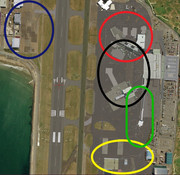
For the purposes of using FSX and your flight simulation experience, to help you recognise the area's from the FSX point of view using Rob's Toprob NZWN Subscription scenery top down screen shot.
Blue Circle Western Apron South end for stop over visiting Military RNZAF aircraft and VIP Executive Private Jets.
Red Circle Eastern Apron North end International Terminal Gate Stands for DC-8's, 747SP's, 767's, 777's, 737-8’s and A320
Black Circle Eastern Apron Centre Domestic Gate Stand's for Turboprop's eg ATR 72, Bombardier Q300 and domestic air transport jets 737's, Airbus A320
Green Circle Eastern Apron South End Regional Gate Stand's 3rd Lvel Airline Aircraft eg Turboprop's Fairchild Metroliners, Saab 340, Pilatus PC12 and Cessna Caravan's
Yellow Circle Eastern Apron South End would be used for the occasional freighter cargo stop over Gate Stands for unloading and loading of cargo goods which is close to the DHL Express and DHL Global Forwarding Freight Depots at the Southern End of Wellington Airport.
Hope this helps.
Wellington Airport that we know today opened officially on 24 October 1959.
Wellington Airport Terminal originally started out solely as a local Domestic terminal which was built as a temporary measure inside a corrugated iron aircraft hangar, that was originally used to assemble de Havilland aircraft post World War 2. It was known for being overcrowded, leaky and draughty. It was, affectionately called the “tin shed”; it ended up being a little more than temporary – lasting 40 years until 1999 when the new Wellington Airport terminal that we now know of today was finally built.
The new Wellington Airport terminal is an integration of a separate International terminal that was built in 1977 which was built just slightly to the north of the old now demolish domestic "tin shed" terminal. The International terminal received an extension add on with the arrival of Ansett Australia who purchased "Newmans" Airline Dash 7's and the BAe 146 'Whisperjet' they rebranded to create Ansett New Zealand and built new Terminals in NZ. They later replaced their purchased fleet with 737's for competing with Air NZ in the domestic air services market in 1987.
Prior to 1977 the Trans Tasman route DC-8s used to park up on the Eastern Apron Southern End of the old now demolish domestic "tin shed" terminal. This was in the vicinity of what is now known as Regional Airlines Gate Stand's 9 and 10.
Once the new 1977 International Terminal was built, the DC-8's would later be parked at the Northern Apron end in what is now known as the general area of the "Rock" an odd looking shape design of the International Departure Lounge with the surrounding Gate Stand's 21 - 27 these would later be used by 747SP's and 767's
That would make the official NZWN International gates for Air New Zealand 767's, 777's 737-8’s and A320 and DC-8s along with the older Qantas 747SP parked at the Eastern Apron Northern end Gate Stand's 21 - 28
The cargo freight depots are located on the Eastern Apron Southern End behind the Air New Zealand Maintenance hanger, so any such flights such as DHL or FedEx or local cargo airlines, would likely unload or load cargo goods, from Gate Stand's 1 - 3 this is away south of the new Wellington Airport terminal.
Nick is correct the Defence Force has hanger on the Western Apron South end however it's not a Military base as no RNZAF Aircraft are permanently based at NZWN. It's primarily used as a temporary stop over location with the RNZAF Air Movements Section that is based there with their VIP Terminal for visiting dignitaries eg HM Queen Elizabeth 2, Prince of Wales or last year's visit by the Duke and Duchess of Sussex. Who arrive either on RNZAF's 757's or an occasional visit by a United States Government offical plane.
The South end of the Western apron is usually considered by Plane Spotters to be where you will find the Executive VIP Private Jets for the likes of Hollywood Stars to arrive and depart from Welly-wood for appearing in Weta Digital made Movies in conjunction with movie Directors Peter Jackson's Hobbit, LOTR and Avatar's James Cameron produced movies.
Peter Jackson owns a Gulfsteam GVI 650 which he can call upon to arrange for his guest's to arrive and depart from the the Western Apron side. Also the Life Flight Air Ambulance base of British Aerospace Jetstream 32 and Westpac Rescue Helicopter Bolkow Kawasaki 117 (BK117). The Wellington GA light aircraft Aero Club is also located on the Western Apron.
For the purposes of using FSX and your flight simulation experience, to help you recognise the area's from the FSX point of view using Rob's Toprob NZWN Subscription scenery top down screen shot.
Blue Circle Western Apron South end for stop over visiting Military RNZAF aircraft and VIP Executive Private Jets.
Red Circle Eastern Apron North end International Terminal Gate Stands for DC-8's, 747SP's, 767's, 777's, 737-8’s and A320
Black Circle Eastern Apron Centre Domestic Gate Stand's for Turboprop's eg ATR 72, Bombardier Q300 and domestic air transport jets 737's, Airbus A320
Green Circle Eastern Apron South End Regional Gate Stand's 3rd Lvel Airline Aircraft eg Turboprop's Fairchild Metroliners, Saab 340, Pilatus PC12 and Cessna Caravan's
Yellow Circle Eastern Apron South End would be used for the occasional freighter cargo stop over Gate Stands for unloading and loading of cargo goods which is close to the DHL Express and DHL Global Forwarding Freight Depots at the Southern End of Wellington Airport.
Hope this helps.
- Radar88
- Forum Addict
- Joined: Sun Feb 15, 2015 2:32 pm
- Posts: 308
Re: Parking Spots For Wellington Airport Please
by Aharon » Sat Mar 09, 2019 3:52 am
Lindstrim,
Thanks for explanations, for amazing link to specific chart, and for useful explanation of specific parking location of RNZAF 757s.
Radar88,
Thanks for amazing amazing amazing well detailed and well described explanations of NZWN Wellington operations throughout 2 centuries. Your specific and extremely amazing explanations are very very very helpful in most valuable manner for me to recreate real world historic and present flights and parking locations for my flight simming. I am so glad you told me specific gate parking for DC-8s, 747SPs, and 767s.
When you say Trans Tasman Dc-8 routes, do you mean TEAL airline DC-8 or should I be looking for Trans Tasman airline liveries for DC-8s? Please advise as I would like to be realistic in flight simming.
Once again, thanks to both Lindstrim and Radar88 for amazing explanations.
Regards,
Aharon
Thanks for explanations, for amazing link to specific chart, and for useful explanation of specific parking location of RNZAF 757s.
Radar88,
Thanks for amazing amazing amazing well detailed and well described explanations of NZWN Wellington operations throughout 2 centuries. Your specific and extremely amazing explanations are very very very helpful in most valuable manner for me to recreate real world historic and present flights and parking locations for my flight simming. I am so glad you told me specific gate parking for DC-8s, 747SPs, and 767s.
When you say Trans Tasman Dc-8 routes, do you mean TEAL airline DC-8 or should I be looking for Trans Tasman airline liveries for DC-8s? Please advise as I would like to be realistic in flight simming.
Once again, thanks to both Lindstrim and Radar88 for amazing explanations.
Regards,
Aharon
- Aharon
- NZFF Pro
- Topic author
- Joined: Sun Jul 23, 2017 11:39 am
- Posts: 2042
Re: Parking Spots For Wellington Airport Please
by Radar88 » Mon Mar 11, 2019 5:45 pm
Tasman Empire Airways Limited (TEAL) was the forerunner of Air New Zealand.
The company was formed by an Intergovernmental Agreement for Tasman Sea Air Services (also known as the Tasman Sea Agreement), a treaty signed by the United Kingdom, Australia, and New Zealand in London on 10 April 1940. TEAL was first registered in Wellington as a limited liability company on 26 April 1940. The company's purpose was originally to transport mail, passengers and cargo across the Tasman Sea between Australia and New Zealand, during World War II.
From 1950–54 Wellington was served by a TEAL Solent flying boat operating a Wellington - Sydney Trans Tasman service from Evans Bay Wellington Harbour.
TEAL then started operating Douglas DC-6s on the Trans Tasman between Australia and New Zealand cities Auckland and Christchurch and the Coral Routes of the South Pacific Islands between 1954 and 1961
Wellington's rebuilt Rongotai Airport handled its first DC-6 Trans Tasman service between Wellington and Sydney,Australia just after it re-opened in 1959, ending the Trans-Tasman Solent flying boat operations from nearby Evans Bay.
In April 1961 the Australian government decided to subsidised the wholly Australian-owned Qantas airline and the New Zealand government bought out the Australian government's shareholding, giving New Zealand 100% ownership of TEAL. The airline changed to Air New Zealand (its present name) on 1 April 1965 at the same time as Douglas DC-8s entered service for the Trans Tasman and Coral Routes. TEAL's TE flight code carried over to Air New Zealand, which continued to use it for its international routes until 1989. Then its international flights began using the NZ code that belonged to NAC and had been used for that carrier's domestic flights.
1 February 1971 1st Air New Zealand DC8 lands at Wellington after training flight.
1 May 1972 An Air New Zealand DC8 makes the inaugural pure jet, Sydney to Wellington, flight.
11 July 1981 Air New Zealand converts a DC-8 to a freighter for international cargo service.
14 December 1981 Air New Zealand withdraws it's last two passenger DC-8s from service.
Qantas Australia's national Airline, lands a 747SP at Wellington International Airport in 1981 to fill the Trans Tasman route Sydney to Wellington vacated by Air New Zealand with the withdrawal of the DC-8s from passenger transport service.
Air New Zealand takes delivery in 1985 of their first Boeing 767-200s to fill the medium range and payload a gap vacated by the DC-8 and DC-10s. This allowed Air New Zealand to resume service on the trans-Tasman Wellington - Sydney route with a more intensive frequency flights than previously offered for flights across the Tasman with the likes of being able to fly to Western Australia Perth and also allowing for repositioning flights for use on the main trunk domestic services.
The Qantas 747SP ceased flight operations on the Trans Tasman route Sydney to Wellington around this time as like Air New Zealand they also obtained their first Boeing 767-200s and later went into competition with Air New Zealand with both using Boeing 767-200s on the Trans Tasman routes.
If you like you can check out some rough old NZ Retro-AI Wellington Airport NZWN (1970s) parking screen shots, done some 11 odd years ago by Lawrie aka Snowman, just to give you a basic idea of the old demolished original "tin shed" Terminal lay out parking spots that Wellington used to have before the new terminal lay out.
Also here's some historical photos as an example of parking spots for Wellington Airport
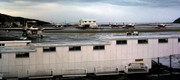
DC-8 being Push back NZWN in what is now the Eastern Apron south end Domestic Gate Stand's
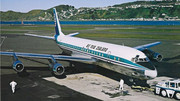
DC 8 Parked Nth End of Eastern Apron in front of Wellington Airport Fire Rescue Cab Building
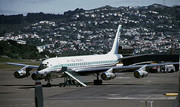
Eastern Apron South End DC 8 Parked in front of Tin Shed Terminal 1970's
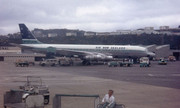
1960's Eastern Apron South End Bristol Type 170 Freighter Cargo parking area with the tin shed domestic terminal pier ramp air bridge up to wellington airport's old observation deck.
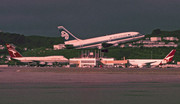
1980's Wellington International Terminal Qantas 747SP parked up "the 747SP nose area is now where the 'Rock' departure lounge has been added onto the building structure.
Hope this assists in getting the idea of parking Historical aircraft that would no longer use the current modern Terminal design Apron Stands.
The company was formed by an Intergovernmental Agreement for Tasman Sea Air Services (also known as the Tasman Sea Agreement), a treaty signed by the United Kingdom, Australia, and New Zealand in London on 10 April 1940. TEAL was first registered in Wellington as a limited liability company on 26 April 1940. The company's purpose was originally to transport mail, passengers and cargo across the Tasman Sea between Australia and New Zealand, during World War II.
From 1950–54 Wellington was served by a TEAL Solent flying boat operating a Wellington - Sydney Trans Tasman service from Evans Bay Wellington Harbour.
TEAL then started operating Douglas DC-6s on the Trans Tasman between Australia and New Zealand cities Auckland and Christchurch and the Coral Routes of the South Pacific Islands between 1954 and 1961
Wellington's rebuilt Rongotai Airport handled its first DC-6 Trans Tasman service between Wellington and Sydney,Australia just after it re-opened in 1959, ending the Trans-Tasman Solent flying boat operations from nearby Evans Bay.
In April 1961 the Australian government decided to subsidised the wholly Australian-owned Qantas airline and the New Zealand government bought out the Australian government's shareholding, giving New Zealand 100% ownership of TEAL. The airline changed to Air New Zealand (its present name) on 1 April 1965 at the same time as Douglas DC-8s entered service for the Trans Tasman and Coral Routes. TEAL's TE flight code carried over to Air New Zealand, which continued to use it for its international routes until 1989. Then its international flights began using the NZ code that belonged to NAC and had been used for that carrier's domestic flights.
1 February 1971 1st Air New Zealand DC8 lands at Wellington after training flight.
1 May 1972 An Air New Zealand DC8 makes the inaugural pure jet, Sydney to Wellington, flight.
11 July 1981 Air New Zealand converts a DC-8 to a freighter for international cargo service.
14 December 1981 Air New Zealand withdraws it's last two passenger DC-8s from service.
Qantas Australia's national Airline, lands a 747SP at Wellington International Airport in 1981 to fill the Trans Tasman route Sydney to Wellington vacated by Air New Zealand with the withdrawal of the DC-8s from passenger transport service.
Air New Zealand takes delivery in 1985 of their first Boeing 767-200s to fill the medium range and payload a gap vacated by the DC-8 and DC-10s. This allowed Air New Zealand to resume service on the trans-Tasman Wellington - Sydney route with a more intensive frequency flights than previously offered for flights across the Tasman with the likes of being able to fly to Western Australia Perth and also allowing for repositioning flights for use on the main trunk domestic services.
The Qantas 747SP ceased flight operations on the Trans Tasman route Sydney to Wellington around this time as like Air New Zealand they also obtained their first Boeing 767-200s and later went into competition with Air New Zealand with both using Boeing 767-200s on the Trans Tasman routes.
If you like you can check out some rough old NZ Retro-AI Wellington Airport NZWN (1970s) parking screen shots, done some 11 odd years ago by Lawrie aka Snowman, just to give you a basic idea of the old demolished original "tin shed" Terminal lay out parking spots that Wellington used to have before the new terminal lay out.
Also here's some historical photos as an example of parking spots for Wellington Airport
DC-8 being Push back NZWN in what is now the Eastern Apron south end Domestic Gate Stand's
DC 8 Parked Nth End of Eastern Apron in front of Wellington Airport Fire Rescue Cab Building
Eastern Apron South End DC 8 Parked in front of Tin Shed Terminal 1970's
1960's Eastern Apron South End Bristol Type 170 Freighter Cargo parking area with the tin shed domestic terminal pier ramp air bridge up to wellington airport's old observation deck.
1980's Wellington International Terminal Qantas 747SP parked up "the 747SP nose area is now where the 'Rock' departure lounge has been added onto the building structure.
Hope this assists in getting the idea of parking Historical aircraft that would no longer use the current modern Terminal design Apron Stands.
- Radar88
- Forum Addict
- Joined: Sun Feb 15, 2015 2:32 pm
- Posts: 308
Re: Parking Spots For Wellington Airport Please
by Aharon » Tue Mar 12, 2019 2:16 am
Radar88 wrote:Tasman Empire Airways Limited (TEAL) was the forerunner of Air New Zealand.
Ahhhhh For a moment, I thought you meant Trans Tasman airline which mean I had to look for Trans Tasman airline liveries. Good to know that you mean TEAL which I already have TEAL liveries for freeware DC-8s.
Radar88 wrote:Hope this assists in getting the idea of parking Historical aircraft that would no longer use the current modern Terminal design Apron Stands.
You can bet that your previous posts contain such fantastic and such extremely helpful facts that will do great to guide me to recreate most realistic parking spots or gates for all aircrafts past 2 centuries.
Once again, thank you so much for most comprehensive and most thorough explanation of so much accurate and specific parking or gate locations of NZWN Wellington airport operations that I hope the moderators of NZFF would make it sticky post with new title "Specific NZWN Parking Locations of 20th and 21st Centuries" for any flightsimmer's future reference or guide.
Regards,
Aharon
- Aharon
- NZFF Pro
- Topic author
- Joined: Sun Jul 23, 2017 11:39 am
- Posts: 2042
8 posts
• Page 1 of 1
Return to New Zealand Aviation
Who is online
Users browsing this forum: No registered users and 26 guests