
Dumbing it down
19 posts
• Page 1 of 1
Dumbing it down
 by Splitpin » Sun Aug 23, 2020 1:59 pm
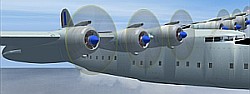
Cant get it more simple than this ...and I think it suits the old girl.
-


Splitpin - NZFF Pro
- Topic author
- Joined: Mon Aug 03, 2009 12:15 pm
- Posts: 21388
- Location: Christchurch NZ
Re: Dumbing it down
by emfrat » Sun Aug 23, 2020 2:19 pm

MikeW
'Propliner' is actually short for 'Proper airliner, with big rumbly radials'
'Propliner' is actually short for 'Proper airliner, with big rumbly radials'
-

emfrat - NZFF Pro
- Joined: Sat May 07, 2011 7:41 pm
- Posts: 4129
- Location: 50 DME YBBN
Re: Dumbing it down
by cowpatz » Sun Aug 23, 2020 4:40 pm
Very nice as usual Marty. Is this in MSFS?
-

cowpatz - NZFF Pro
- Joined: Wed Mar 07, 2007 3:28 pm
- Posts: 3749
Re: Dumbing it down
by Splitpin » Sun Aug 23, 2020 5:39 pm
Thanks gents ....CP , no mate , that's (MSFS) a way off for me ...this is P3DV4.5 .
-
Splitpin - NZFF Pro
- Topic author
- Joined: Mon Aug 03, 2009 12:15 pm
- Posts: 21388
- Location: Christchurch NZ
Re: Dumbing it down
by Splitpin » Mon Aug 24, 2020 6:24 pm
CP , it's the FS Addon model ..... it's not super complex but it's fun. Can recall many a cold deafening trip in these ...looking out through oil streaked windows.
If the props got out of sync the vibration would loosen your teeth ...wonderful stuff.
If the props got out of sync the vibration would loosen your teeth ...wonderful stuff.
-
Splitpin - NZFF Pro
- Topic author
- Joined: Mon Aug 03, 2009 12:15 pm
- Posts: 21388
- Location: Christchurch NZ
Re: Dumbing it down
by cowpatz » Mon Aug 24, 2020 6:26 pm
Yes a friend flew them for Safe Air in their heyday and he did say that they leaked like a sieve when it rained.
-
cowpatz - NZFF Pro
- Joined: Wed Mar 07, 2007 3:28 pm
- Posts: 3749
Re: Dumbing it down
by deeknow » Mon Aug 24, 2020 6:36 pm
we could build a rain simulator for Marty, lets call it a "sprinkler", and connect it up to the weather engine in the simulator 
-

deeknow - NZFF Pro
- Joined: Tue Sep 18, 2007 10:15 pm
- Posts: 4468
- Location: NZHN
Re: Dumbing it down
by Splitpin » Wed Aug 26, 2020 5:41 pm
deeknow wrote:we could build a rain simulator for Marty, lets call it a "sprinkler", and connect it up to the weather engine in the simulator
Only you would come up with that DK

-
Splitpin - NZFF Pro
- Topic author
- Joined: Mon Aug 03, 2009 12:15 pm
- Posts: 21388
- Location: Christchurch NZ
Re: Dumbing it down
by Splitpin » Wed Aug 26, 2020 5:47 pm
cowpatz wrote:Yes a friend flew them for Safe Air in their heyday and he did say that they leaked like a sieve when it rained.
They did CP ....and in winter they were cold (downstairs) from memory the "heater" was a pipe with engine heated water flowing through it ......
-
Splitpin - NZFF Pro
- Topic author
- Joined: Mon Aug 03, 2009 12:15 pm
- Posts: 21388
- Location: Christchurch NZ
Re: Dumbing it down
by Jeffref » Wed Aug 26, 2020 6:20 pm
Thry gotcha from A to B. What else could you ask for?
- Jeffref
- Member
- Joined: Tue Dec 11, 2018 8:19 pm
- Posts: 146
Re: Dumbing it down
by cowpatz » Wed Aug 26, 2020 6:22 pm
Speed, comfort, warmth, no vibration and lees noise to name just a few.
-
cowpatz - NZFF Pro
- Joined: Wed Mar 07, 2007 3:28 pm
- Posts: 3749
Re: Dumbing it down
by Splitpin » Wed Aug 26, 2020 6:26 pm
Jeffref wrote:Thry gotcha from A to B. What else could you ask for?
Not much Jeff ...loved every trip. I had a friend in air movents section , and whenever I had some leave, rather than book a seat on a Dak or Herc, he would work me onto a freighter flight home.
Sometimes it took 2 days ...wonderful memories.
-
Splitpin - NZFF Pro
- Topic author
- Joined: Mon Aug 03, 2009 12:15 pm
- Posts: 21388
- Location: Christchurch NZ
Re: Dumbing it down
by cowpatz » Wed Aug 26, 2020 6:27 pm
Bristol Freighter Crash, 1957
On 21 November, 1957, four people were killed on board a Bristol Freighter which, due to structural failure caused by metal fatigue, disintegrated in mid-air, and crashed into Christchurch’s Russley Golf Course. The aircraft served from 1951 as part of the Straits Air Freight Express fleet, the company having won the government contract to run the inter-island rail-air freight service in 1950.
Just after 10am on 21 November, the captain Robert Hamilton and his first officer Helge Torgerson, accompanied by Tom O’Connell the company’s founder and general manager, and James McLaggan, a university student, departed from Paraparaumu for what was meant to be a routine cargo flight to Timaru. It was the second flight the aircraft had made that morning. According to the International Civil Aviation Organization (ICAO) report, the first flight, from Blenheim to Paraparaumu, had not gone without incident. Those on board that flight were subject to ‘a sudden and severe vibration’ felt throughout the aircraft, after the starboard propeller had been unfeathered. Nevertheless, that flight landed safely and the plane was emptied and reloaded with cargo, including two Aberdeen Angus cows in specially constructed wooden crates, for the Timaru journey.
The second flight reached the mouth of the Waimakariri River just north of Christchurch at about 11.30am, and the crew contacted Christchurch’s Harewood air traffic control tower to seek clearance to descend and proceed to Timaru. Nothing particularly untoward had been noted during the course of the flight to that point, barring some heavy turbulence and strong northwest winds, and the Harewood Tower duly granted clearance to the aircraft to continue on its course.
Minutes later, a member of the Harewood air traffic control staff heard an explosion. At his exclamation, according to a report on the crash from the Station Air Traffic Officer at Harewood to the Christchurch Regional Airways Officer, the tower controller turned around and saw a large mushroom-shaped cloud of smoke, with pieces of debris raining down from the sky. Eyewitnesses on the ground had seen the starboard outer wing of the plane fold upwards, backwards, and then separate from the plane, falling onto the farmland below. The nose doors, the floor of the freight compartment, and the rear of the fuselage, with the fin and rudder attached, were the next to fall. The remainder of the aircraft crashed, nose first, into a belt of pine trees on the southeast boundary of the Russley Golf Course, and erupted into flames.
The Christchurch Airport Fire Service’s report to the Director of Civil Aviation in Wellington notes that the response of the emergency services was swift and comprehensive. It commends, in particular, the dedication and bravery shown by volunteer fire crew members, many of whom were responding to their first incident, in what was an immensely harrowing situation.
However nothing could be done for the four men on board, three of whom had died on impact, and the other very shortly thereafter. Memorials to the four men, on and near the crash site, were erected on the 35th and 50th anniversaries of the tragedy.
Source. Archives NZ
On 21 November, 1957, four people were killed on board a Bristol Freighter which, due to structural failure caused by metal fatigue, disintegrated in mid-air, and crashed into Christchurch’s Russley Golf Course. The aircraft served from 1951 as part of the Straits Air Freight Express fleet, the company having won the government contract to run the inter-island rail-air freight service in 1950.
Just after 10am on 21 November, the captain Robert Hamilton and his first officer Helge Torgerson, accompanied by Tom O’Connell the company’s founder and general manager, and James McLaggan, a university student, departed from Paraparaumu for what was meant to be a routine cargo flight to Timaru. It was the second flight the aircraft had made that morning. According to the International Civil Aviation Organization (ICAO) report, the first flight, from Blenheim to Paraparaumu, had not gone without incident. Those on board that flight were subject to ‘a sudden and severe vibration’ felt throughout the aircraft, after the starboard propeller had been unfeathered. Nevertheless, that flight landed safely and the plane was emptied and reloaded with cargo, including two Aberdeen Angus cows in specially constructed wooden crates, for the Timaru journey.
The second flight reached the mouth of the Waimakariri River just north of Christchurch at about 11.30am, and the crew contacted Christchurch’s Harewood air traffic control tower to seek clearance to descend and proceed to Timaru. Nothing particularly untoward had been noted during the course of the flight to that point, barring some heavy turbulence and strong northwest winds, and the Harewood Tower duly granted clearance to the aircraft to continue on its course.
Minutes later, a member of the Harewood air traffic control staff heard an explosion. At his exclamation, according to a report on the crash from the Station Air Traffic Officer at Harewood to the Christchurch Regional Airways Officer, the tower controller turned around and saw a large mushroom-shaped cloud of smoke, with pieces of debris raining down from the sky. Eyewitnesses on the ground had seen the starboard outer wing of the plane fold upwards, backwards, and then separate from the plane, falling onto the farmland below. The nose doors, the floor of the freight compartment, and the rear of the fuselage, with the fin and rudder attached, were the next to fall. The remainder of the aircraft crashed, nose first, into a belt of pine trees on the southeast boundary of the Russley Golf Course, and erupted into flames.
The Christchurch Airport Fire Service’s report to the Director of Civil Aviation in Wellington notes that the response of the emergency services was swift and comprehensive. It commends, in particular, the dedication and bravery shown by volunteer fire crew members, many of whom were responding to their first incident, in what was an immensely harrowing situation.
However nothing could be done for the four men on board, three of whom had died on impact, and the other very shortly thereafter. Memorials to the four men, on and near the crash site, were erected on the 35th and 50th anniversaries of the tragedy.
Source. Archives NZ
-
cowpatz - NZFF Pro
- Joined: Wed Mar 07, 2007 3:28 pm
- Posts: 3749
Re: Dumbing it down
by Splitpin » Wed Aug 26, 2020 6:28 pm
cowpatz wrote:Speed, comfort, warmth, no vibration and lees noise to name just a few.
true CP ...but you took what you got with those old things back then .....-
Splitpin - NZFF Pro
- Topic author
- Joined: Mon Aug 03, 2009 12:15 pm
- Posts: 21388
- Location: Christchurch NZ
Re: Dumbing it down
by Splitpin » Wed Aug 26, 2020 6:35 pm
Bristol Freighter Crash, 1957:
I remember Dad telling me about that crash many years later ....I was 2 months old at the time
I wonder if there's a memorial still there somewhere ?
I remember Dad telling me about that crash many years later ....I was 2 months old at the time
I wonder if there's a memorial still there somewhere ?
-
Splitpin - NZFF Pro
- Topic author
- Joined: Mon Aug 03, 2009 12:15 pm
- Posts: 21388
- Location: Christchurch NZ
Re: Dumbing it down
by Jeffref » Wed Aug 26, 2020 8:14 pm
Russley Golf Course air crash
On Thursday, 21 November 1957, a Bristol Freighter aircraft disintegrated above the Russley Golf Course, crashed and burst into flames. All four people on board — Robert Hamilton, Helge Torgerson, Tom O'Connell and James McLaggan — were killed. A permanent memorial was erected at the crash site for the 50th anniversary of the accident in 2007.
This memorial was under three birch trees in the grounds of the Brevet Club, not far from the original site of the crash. In 2007 the Russley Golf Course approved the placement of a permanent memorial to the crash on the original site, at the initiative of club member, Phil Boyd. It was completed by 21 November 2007 in time for a 50th anniversary service.
You are probably in the best position to check if it is still there?
I don't think many commercial aircraft have never had a fatal?
A340
A350
A380
B787
On Thursday, 21 November 1957, a Bristol Freighter aircraft disintegrated above the Russley Golf Course, crashed and burst into flames. All four people on board — Robert Hamilton, Helge Torgerson, Tom O'Connell and James McLaggan — were killed. A permanent memorial was erected at the crash site for the 50th anniversary of the accident in 2007.
This memorial was under three birch trees in the grounds of the Brevet Club, not far from the original site of the crash. In 2007 the Russley Golf Course approved the placement of a permanent memorial to the crash on the original site, at the initiative of club member, Phil Boyd. It was completed by 21 November 2007 in time for a 50th anniversary service.
You are probably in the best position to check if it is still there?
I don't think many commercial aircraft have never had a fatal?
A340
A350
A380
B787
- Jeffref
- Member
- Joined: Tue Dec 11, 2018 8:19 pm
- Posts: 146
Re: Dumbing it down
by Splitpin » Wed Aug 26, 2020 8:18 pm
Thanks Jeff, Im on leave this week so I will venture out and see if I can find it ...thanks again.
-
Splitpin - NZFF Pro
- Topic author
- Joined: Mon Aug 03, 2009 12:15 pm
- Posts: 21388
- Location: Christchurch NZ
Re: Dumbing it down
by cowpatz » Thu Aug 27, 2020 9:09 am
Jeffref wrote:I don't think many commercial aircraft have never had a fatal?
A340
A350
A380
B787
The only one that I can think of was the Air Adventures Piper Chieftain from Palmerston North in 2003. Michael Bannerman was the owner operator.
It crashed short of the runway in fog and all 8 occupants were killed.
-
cowpatz - NZFF Pro
- Joined: Wed Mar 07, 2007 3:28 pm
- Posts: 3749
19 posts
• Page 1 of 1
Who is online
Users browsing this forum: No registered users and 30 guests