
Folding wings…..
44 posts
• Page 2 of 3 • 1, 2, 3
Re: Folding wings…..
 by Splitpin » Wed Apr 09, 2025 5:45 pm
Great stuff CP, really looking forward to reading more
-

Splitpin - NZFF Pro
- Joined: Mon Aug 03, 2009 12:15 pm
- Posts: 21446
- Location: Christchurch NZ
Re: Folding wings…..
by Aharon » Thu Apr 10, 2025 1:58 am
Cowpatz,
Thanks for interesting answers on your favorite and scenic routes. HAPPY retirement to you!!!!!
Regards,
Aharon
Thanks for interesting answers on your favorite and scenic routes. HAPPY retirement to you!!!!!
Regards,
Aharon
- Aharon
- NZFF Pro
- Joined: Sun Jul 23, 2017 11:39 am
- Posts: 2042
Re: Folding wings…..
by mavman » Fri Apr 11, 2025 7:40 pm
Congratulations on your retirement, Cowpatz. What an incredible career you've enjoyed!
Looking forward to reading part 2.
Looking forward to reading part 2.
-

mavman - Forum Addict
- Joined: Sun Apr 30, 2006 7:27 pm
- Posts: 322
- Location: Dunedin
Re: Folding wings…..
by cowpatz » Fri Apr 18, 2025 3:01 pm
Part 2
And so it starts…my first aviation job
Somehow, I was fortunate enough to get my University Entrance certificate accredited. It certainly allowed me to do a bit of model building and flying, instead of studying for the external exams. Up until this point I had a job at a local hardware shop. I’d work there after school and full time during the school holidays. It was one of those great stores that seemed to stock every hardware item imaginable. No pots, pans, toasters or any of that household rubbish that you get now. It was quite old school in that floor staff had to first gain product knowledge before being allowed to be anywhere near a customer. For me this came from my time spent working in the inwards good department, stocking shelves, and reading every label and bit of product information available. The assistant manager was a great “old school” guy who’s work motto was “Sharp’s the word, quick’s the motion.”
Whilst I was working at the hardware store I applied for an Aircraft Engineering Apprenticeship with Air New Zealand Ltd (This was back in the pre-merger days of NAC and Air NZ International). Towards the end of 1976 I received a letter informing me that I was to attend an interview at Air NZ house, 19th Floor, 1 Queen Street. The top floor. I was to bring along with me something that I had made myself. You may recall, in Part 1, that I built a V tail slope soarer during the school holidays. This was to be my project that I would take with me.
The interview day eventually arrived, and I duly headed into town with my model. I hadn’t really thought through the logistics involved in transporting such a large model around (It had a 2 metre wingspan) through a busy downtown Auckland area. Air NZ house was a busy place, and the interview was up on the 19th floor, the same floor that housed the company executives, including the then CEO Morrie Davis. Negotiating the elevators with such a large object, and many people, was tricky, and I almost reduced the model's wingspan due to overly aggressive elevator doors! I certainly drew attention to myself with it.
The glider was a hit, as was my glowing reference from the hardware store.
I was to be one of forty new apprentices, chosen from a pool of 400 plus applicants, to start in early Feb, 1977. It was to be for a 5 year/ 20,000 hr period.
Engineering training
The big day finally arrived. After the initial paperwork, orientation and ground rules were covered, we were given the choice of either a mechanical or Avionics/electrical apprenticeship. I chose the mechanical path.
The training was outstanding. The first 6 months were to be spent in a dedicated workshop. We learnt all about various materials and how to handle and work with them. This involved precision cutting, filing and drilling etc. It was quite exacting and if it wasn’t near perfect the instructor (Bill Harold) would trash it and tell you to start again. He was a hard task master but gained our respect and trust. His mana was enhanced by the fact that he drove an immaculate series 1, 3 litre V6 Ford Capri. The one with the twin headlights. And it was purple! Once we became proficient at the basics, we moved onto things like wing skin repairs and working on various engine types (horizontally opposed lycoming style and radial engines). Learning how to time magnetos etc. All the more interesting on the radial engines with their Vernier coupling mag timing system . For the wing repair the instructor would randomly bash the skin of an old Harvard wing, that was held in a jig, with a ball pein hammer followed by something like, “fix it by the end of the day.” If you made a hash of it then you had to do it again. The initial training also included many lectures as well as watching some amazing videos on how aircraft and engines worked. Many were old movies from the Shell aero company (black and white) but still relevant.
We lost a few of the group, who had either failed to reach the required standard, or decided that it simply wasn’t for them.
At this point the Air Force was dispersing their Harvards and had them up for tender.
Some of the engineering staff floated the idea of tendering for one and to maintain it in flying condition by the apprentices. This caused much excitement, but alas upper management were not on board with it, likewise with a proposal by Brian Hore, another instructor, which would have been to buy, build and sell a Thorp T18 kit plane. We did have a Harvard to work on and do engine runs with, but it was never to be flown. I have recently heard that this Harvard has actually been returned to flying condition, but I have not had this confirmed. Most of the privately owned Harvards that you see flying around today were originally purchased via this tender process.
The workshops
The initial 6 month training period seemed to go on forever. At the conclusion of this initial training we, were assigned our initial workshops. These might be the hangar, engine overhaul shop, component shop (hydraulic/fuel pump etc overhauls), Undercarriage and wheels and brakes, Composite shop, seat shop, cleaning bay etc, etc.
We would individually cycle through all the workshops, usually for a period of between 1 or 2 months. My first assignment was to be the seat shop…….what a let down I thought. Here the seats from the DC8 and DC10 were either repaired or reconditioned. It was best described by someone as “A place where they put ex engineers out to pasture.” Most were institutionalised, grumpy old “poms.” Their highlights of the day were the tea trolly, which arrived twice a day, and the pay man who would arrive, every Wednesday, along with hundreds of envelopes of cash.
My first pay was around $24 for the week. I remember commenting to my fellow apprentices that some of the guys working in the seat shop had been with the company for 30 Years!! “What loser works for the same company for 30 years!” I said. It seemed like an eternity for someone only 17 years of age, but oh how those words would come back to haunt me now. Over the years we progressed through various parts of the engineering base. During this time some of the workshops made overtime work available and this not only boosted the pay packet considerably but also helped with reducing the number of those 20000 required hours at a quicker pace.
Arguably, the favoured section to work in was the hangar. Here we got to work on aircraft in their entirety and not just its components. The company fleet then consisted of DC8s and DC10s with the 747-200 arriving later. We also did contract work for the Airforce on their C130s and P3 Orions. Additionally, a few of us spent some time working as part of a special team overhauling the Airport fire and rescue hovercraft. The hovercraft was a real problem child. It was built to aviation standards and with aircraft spec components, was badly corroded, and was notorious for its controllability issues. Being manufactured to aircraft specifications, it was ridiculously expensive to operate. We fully reconditioned that thing at huge cost. At the time it was considered essential as Auckland Airport is partially located beside the Manukau Harbour, which is very tidal, and at low tides there is a lot of thick mud making a rescue of a downed aircraft very difficult.
The DC10 was a pure work of art, with beautiful lines and an imposing and graceful look. A technical masterpiece and ahead of its time, plus it was a great aircraft to work on. I was in awe when I visited the flight deck for the first time. Compared to the DC8 it was lightyears ahead - Area Navigation, state of the art instrumentation and those huge cockpit windows.
When I sat in the left seat for the first time, I knew that this is where I wanted to be. To be in command of a DC10.
Unfortunately for me, not long after I commenced my training, the option of Flight engineers progressing to First Officer positions stopped and towards the end they stopped hiring Flight Engineers altogether. The first set back in my grand plan.
Another highlight was the arrival of the first 747-200s. A truly impressive aircraft, but one that was technically backward compared to the DC10. As an example, the DC10 had an area navigation system that allowed routes to be stored and flown. These were on “floppy” disks placed into a reader located beside the FD coat cupboard. It was only for lateral navigation, having no vertical guidance capability. The 747 on the other hand just had a Carousel INS system that required the manual lat/long entry of the waypoints during the preflight procedure. Only 9 waypoints could be entered, and during flight prior to reaching waypoint 9, other waypoints had to be entered or else it would do a u turn and head back to waypoint 1! It also required manual position updates during the flight to update the aircraft position. Initially there were a few concerns from a ground engineers point of view when working on the 747. For example, when opening the gear doors on the DC10 for servicing, the hydraulics had a restrictor in them which limited the hydraulic pressure and thus made the gear doors move slowly. If something went wrong (as in someone standing on or close to the doors) then it gave a bit of time to get yourself clear. Not so with the 747. When the hydraulics are selected on via the air driven demand pumps they provide a near instant 3000 psi (A loud horn is sounded in the hangar a short time prior to pressurising the system to ensure staff are aware). The gear doors slam open and shut with no time to get clear. For many months after the 747 introduction, engineers would carry a length of 4x2 timber (marked B747 safety tool) around with them. Whenever they were required to work within, or on top of the gear doors, they would wedge the “tool” in as best as they could so as to slow the door down and give a chance to escape. As far as I know these “tools” were never put to the test. More of a joke really. There were several fatalities associated with this by other airlines. Often a line engineer would lower the nose gear doors to check the nose gear area and install or remove the gear pins. He would then turn the hydraulics off before working in the area. In order to save time when closing the doors, instead of going back into the flight deck to pressurise the system, come back down to raise the doors and then back up again to depressurise the system, they would select the external nose gear door to the closed position and then head up to the flight deck and pressurise the system to power the closing doors. Unfortunately, other ramp staff that were not aware of this, might unknowingly inspect the nose well area only to be seriously injured, or killed, by the powerful doors closing suddenly and without warning.
Outstation experience
Another highlight was being temporarily seconded to one of the company’s engineering outstations. From memory this was toward the end of the third year.
There were 3 bases: Christchurch, Wellington and Rarotonga. I was assigned Christchurch, and I would be there for 6 months. It was to be a life changing experience and my first time away from home.
As it was to be shift work, as well as away from home allowances, I expected to earn a small fortune.
The company rented 2 flats. Both were located in Springfield Rd, St Albans and were about 300 metres apart. Each flat housed 2 apprentices. Across the road from our flat (1 of 4 in the complex) was a large house containing many young trainee nurses. What could possibly go wrong with four 19 year olds, being away from home for the first time, with many a fair nurse just across the road. Short answer…..a lot.
I was shocked when I entered my flat for the very first time. I’m not sure what I noticed first as it was such a visual assault to the system. The ceiling had many dents in it and there were footprints all over it! The dents were from the opening of many champagne bottles, the feet…well…..
None of the furniture had legs, but instead sat on concrete blocks, and the only door intact was to the bathroom/ toilet. Anything wooden had been cut up and burnt, for warmth, a long time ago. There was no fireplace. Instead, the fire was set on an open oven door! The carpet failed to reach the walls by about 100mm. This was due to many parties and the repeated soaking of the carpet due to the spillage of various beverages. At one such event (well prior to my arrival) so much beverage was spilt on the floor that a hose was used to assist in cleaning it out. Now the flat was one of 2 on an upper level, with 2 on the lower. The problem with using a hose was how to get rid of so much fluid out of the flat. Being young engineers the solution was simple, drill holes in the floor, much to the anger of the downstairs tenant. I believe that event lead to the first of several eviction notices and compensation deals.
So that was how the scene was set. It was a wild and wonderful experience that extended out to 9 months for me. Two apprentices from my course intake ended up, in their later lives, marrying nurses that they had befriended from across the road, and one ended up marrying the lovely girl who lived in the flat next door.
During the course of the secondment, we would be tasked with conducting aircraft turnaround checks, and any emergency repairs, at any time of the day or night. Often, we were left to our own devices only requiring the licensed engineer to certify the logbook. We were dropped in the deep end but learnt quickly….you had to. Not only did we service our own transiting aircraft but also the likes of Qantas, Singapore Airlines, Ansett, TAA, aircraft diverting from Auckland or Wellington as well as visiting military aircraft.
At the conclusion of those 9 months, I returned home, not with a fortune, but several loaded credit cards and the most amazing memories, friendships and life experiences a teenager could ever possibly hope to have. Those experiences and stories could fill a book (No SP), but I would probably either be arrested, or threatened by numerous “interested” parties. Maybe if there is interest, I may share some of my milder experiences
Shortly after starting my apprenticeship, I started learning to fly.
Maybe that’s best left to part 3
Cheers
CP
And so it starts…my first aviation job
Somehow, I was fortunate enough to get my University Entrance certificate accredited. It certainly allowed me to do a bit of model building and flying, instead of studying for the external exams. Up until this point I had a job at a local hardware shop. I’d work there after school and full time during the school holidays. It was one of those great stores that seemed to stock every hardware item imaginable. No pots, pans, toasters or any of that household rubbish that you get now. It was quite old school in that floor staff had to first gain product knowledge before being allowed to be anywhere near a customer. For me this came from my time spent working in the inwards good department, stocking shelves, and reading every label and bit of product information available. The assistant manager was a great “old school” guy who’s work motto was “Sharp’s the word, quick’s the motion.”
Whilst I was working at the hardware store I applied for an Aircraft Engineering Apprenticeship with Air New Zealand Ltd (This was back in the pre-merger days of NAC and Air NZ International). Towards the end of 1976 I received a letter informing me that I was to attend an interview at Air NZ house, 19th Floor, 1 Queen Street. The top floor. I was to bring along with me something that I had made myself. You may recall, in Part 1, that I built a V tail slope soarer during the school holidays. This was to be my project that I would take with me.
The interview day eventually arrived, and I duly headed into town with my model. I hadn’t really thought through the logistics involved in transporting such a large model around (It had a 2 metre wingspan) through a busy downtown Auckland area. Air NZ house was a busy place, and the interview was up on the 19th floor, the same floor that housed the company executives, including the then CEO Morrie Davis. Negotiating the elevators with such a large object, and many people, was tricky, and I almost reduced the model's wingspan due to overly aggressive elevator doors! I certainly drew attention to myself with it.
The glider was a hit, as was my glowing reference from the hardware store.
I was to be one of forty new apprentices, chosen from a pool of 400 plus applicants, to start in early Feb, 1977. It was to be for a 5 year/ 20,000 hr period.
Engineering training
The big day finally arrived. After the initial paperwork, orientation and ground rules were covered, we were given the choice of either a mechanical or Avionics/electrical apprenticeship. I chose the mechanical path.
The training was outstanding. The first 6 months were to be spent in a dedicated workshop. We learnt all about various materials and how to handle and work with them. This involved precision cutting, filing and drilling etc. It was quite exacting and if it wasn’t near perfect the instructor (Bill Harold) would trash it and tell you to start again. He was a hard task master but gained our respect and trust. His mana was enhanced by the fact that he drove an immaculate series 1, 3 litre V6 Ford Capri. The one with the twin headlights. And it was purple! Once we became proficient at the basics, we moved onto things like wing skin repairs and working on various engine types (horizontally opposed lycoming style and radial engines). Learning how to time magnetos etc. All the more interesting on the radial engines with their Vernier coupling mag timing system . For the wing repair the instructor would randomly bash the skin of an old Harvard wing, that was held in a jig, with a ball pein hammer followed by something like, “fix it by the end of the day.” If you made a hash of it then you had to do it again. The initial training also included many lectures as well as watching some amazing videos on how aircraft and engines worked. Many were old movies from the Shell aero company (black and white) but still relevant.
We lost a few of the group, who had either failed to reach the required standard, or decided that it simply wasn’t for them.
At this point the Air Force was dispersing their Harvards and had them up for tender.
Some of the engineering staff floated the idea of tendering for one and to maintain it in flying condition by the apprentices. This caused much excitement, but alas upper management were not on board with it, likewise with a proposal by Brian Hore, another instructor, which would have been to buy, build and sell a Thorp T18 kit plane. We did have a Harvard to work on and do engine runs with, but it was never to be flown. I have recently heard that this Harvard has actually been returned to flying condition, but I have not had this confirmed. Most of the privately owned Harvards that you see flying around today were originally purchased via this tender process.
The workshops
The initial 6 month training period seemed to go on forever. At the conclusion of this initial training we, were assigned our initial workshops. These might be the hangar, engine overhaul shop, component shop (hydraulic/fuel pump etc overhauls), Undercarriage and wheels and brakes, Composite shop, seat shop, cleaning bay etc, etc.
We would individually cycle through all the workshops, usually for a period of between 1 or 2 months. My first assignment was to be the seat shop…….what a let down I thought. Here the seats from the DC8 and DC10 were either repaired or reconditioned. It was best described by someone as “A place where they put ex engineers out to pasture.” Most were institutionalised, grumpy old “poms.” Their highlights of the day were the tea trolly, which arrived twice a day, and the pay man who would arrive, every Wednesday, along with hundreds of envelopes of cash.
My first pay was around $24 for the week. I remember commenting to my fellow apprentices that some of the guys working in the seat shop had been with the company for 30 Years!! “What loser works for the same company for 30 years!” I said. It seemed like an eternity for someone only 17 years of age, but oh how those words would come back to haunt me now. Over the years we progressed through various parts of the engineering base. During this time some of the workshops made overtime work available and this not only boosted the pay packet considerably but also helped with reducing the number of those 20000 required hours at a quicker pace.
Arguably, the favoured section to work in was the hangar. Here we got to work on aircraft in their entirety and not just its components. The company fleet then consisted of DC8s and DC10s with the 747-200 arriving later. We also did contract work for the Airforce on their C130s and P3 Orions. Additionally, a few of us spent some time working as part of a special team overhauling the Airport fire and rescue hovercraft. The hovercraft was a real problem child. It was built to aviation standards and with aircraft spec components, was badly corroded, and was notorious for its controllability issues. Being manufactured to aircraft specifications, it was ridiculously expensive to operate. We fully reconditioned that thing at huge cost. At the time it was considered essential as Auckland Airport is partially located beside the Manukau Harbour, which is very tidal, and at low tides there is a lot of thick mud making a rescue of a downed aircraft very difficult.
The DC10 was a pure work of art, with beautiful lines and an imposing and graceful look. A technical masterpiece and ahead of its time, plus it was a great aircraft to work on. I was in awe when I visited the flight deck for the first time. Compared to the DC8 it was lightyears ahead - Area Navigation, state of the art instrumentation and those huge cockpit windows.
When I sat in the left seat for the first time, I knew that this is where I wanted to be. To be in command of a DC10.
Unfortunately for me, not long after I commenced my training, the option of Flight engineers progressing to First Officer positions stopped and towards the end they stopped hiring Flight Engineers altogether. The first set back in my grand plan.
Another highlight was the arrival of the first 747-200s. A truly impressive aircraft, but one that was technically backward compared to the DC10. As an example, the DC10 had an area navigation system that allowed routes to be stored and flown. These were on “floppy” disks placed into a reader located beside the FD coat cupboard. It was only for lateral navigation, having no vertical guidance capability. The 747 on the other hand just had a Carousel INS system that required the manual lat/long entry of the waypoints during the preflight procedure. Only 9 waypoints could be entered, and during flight prior to reaching waypoint 9, other waypoints had to be entered or else it would do a u turn and head back to waypoint 1! It also required manual position updates during the flight to update the aircraft position. Initially there were a few concerns from a ground engineers point of view when working on the 747. For example, when opening the gear doors on the DC10 for servicing, the hydraulics had a restrictor in them which limited the hydraulic pressure and thus made the gear doors move slowly. If something went wrong (as in someone standing on or close to the doors) then it gave a bit of time to get yourself clear. Not so with the 747. When the hydraulics are selected on via the air driven demand pumps they provide a near instant 3000 psi (A loud horn is sounded in the hangar a short time prior to pressurising the system to ensure staff are aware). The gear doors slam open and shut with no time to get clear. For many months after the 747 introduction, engineers would carry a length of 4x2 timber (marked B747 safety tool) around with them. Whenever they were required to work within, or on top of the gear doors, they would wedge the “tool” in as best as they could so as to slow the door down and give a chance to escape. As far as I know these “tools” were never put to the test. More of a joke really. There were several fatalities associated with this by other airlines. Often a line engineer would lower the nose gear doors to check the nose gear area and install or remove the gear pins. He would then turn the hydraulics off before working in the area. In order to save time when closing the doors, instead of going back into the flight deck to pressurise the system, come back down to raise the doors and then back up again to depressurise the system, they would select the external nose gear door to the closed position and then head up to the flight deck and pressurise the system to power the closing doors. Unfortunately, other ramp staff that were not aware of this, might unknowingly inspect the nose well area only to be seriously injured, or killed, by the powerful doors closing suddenly and without warning.
Outstation experience
Another highlight was being temporarily seconded to one of the company’s engineering outstations. From memory this was toward the end of the third year.
There were 3 bases: Christchurch, Wellington and Rarotonga. I was assigned Christchurch, and I would be there for 6 months. It was to be a life changing experience and my first time away from home.
As it was to be shift work, as well as away from home allowances, I expected to earn a small fortune.
The company rented 2 flats. Both were located in Springfield Rd, St Albans and were about 300 metres apart. Each flat housed 2 apprentices. Across the road from our flat (1 of 4 in the complex) was a large house containing many young trainee nurses. What could possibly go wrong with four 19 year olds, being away from home for the first time, with many a fair nurse just across the road. Short answer…..a lot.
I was shocked when I entered my flat for the very first time. I’m not sure what I noticed first as it was such a visual assault to the system. The ceiling had many dents in it and there were footprints all over it! The dents were from the opening of many champagne bottles, the feet…well…..
None of the furniture had legs, but instead sat on concrete blocks, and the only door intact was to the bathroom/ toilet. Anything wooden had been cut up and burnt, for warmth, a long time ago. There was no fireplace. Instead, the fire was set on an open oven door! The carpet failed to reach the walls by about 100mm. This was due to many parties and the repeated soaking of the carpet due to the spillage of various beverages. At one such event (well prior to my arrival) so much beverage was spilt on the floor that a hose was used to assist in cleaning it out. Now the flat was one of 2 on an upper level, with 2 on the lower. The problem with using a hose was how to get rid of so much fluid out of the flat. Being young engineers the solution was simple, drill holes in the floor, much to the anger of the downstairs tenant. I believe that event lead to the first of several eviction notices and compensation deals.
So that was how the scene was set. It was a wild and wonderful experience that extended out to 9 months for me. Two apprentices from my course intake ended up, in their later lives, marrying nurses that they had befriended from across the road, and one ended up marrying the lovely girl who lived in the flat next door.
During the course of the secondment, we would be tasked with conducting aircraft turnaround checks, and any emergency repairs, at any time of the day or night. Often, we were left to our own devices only requiring the licensed engineer to certify the logbook. We were dropped in the deep end but learnt quickly….you had to. Not only did we service our own transiting aircraft but also the likes of Qantas, Singapore Airlines, Ansett, TAA, aircraft diverting from Auckland or Wellington as well as visiting military aircraft.
At the conclusion of those 9 months, I returned home, not with a fortune, but several loaded credit cards and the most amazing memories, friendships and life experiences a teenager could ever possibly hope to have. Those experiences and stories could fill a book (No SP), but I would probably either be arrested, or threatened by numerous “interested” parties. Maybe if there is interest, I may share some of my milder experiences
Shortly after starting my apprenticeship, I started learning to fly.
Maybe that’s best left to part 3
Cheers
CP
-

cowpatz - NZFF Pro
- Topic author
- Joined: Wed Mar 07, 2007 3:28 pm
- Posts: 3774
Re: Folding wings…..
by Splitpin » Fri Apr 18, 2025 6:25 pm
Wow ...CP this is great stuff ....thanks very much for doing this.
"
(No SP)" Mate ....this can be censored ...edited (with your consent)
"
(No SP)" Mate ....this can be censored ...edited (with your consent)
-
Splitpin - NZFF Pro
- Joined: Mon Aug 03, 2009 12:15 pm
- Posts: 21446
- Location: Christchurch NZ
Re: Folding wings…..
by FlyingKiwi » Sat Apr 19, 2025 7:23 am
Agreed Splitpin, enjoying reading this so far.
-
FlyingKiwi - Senior Member
- Joined: Mon May 29, 2006 4:17 pm
- Posts: 1690
- Location: Auckland
Re: Folding wings…..
by chopper_nut » Sat Apr 19, 2025 10:37 am
Good stuff. I think a lot of people forget how technologically advanced the DC10 was for it's time. I don't think it deserved the bad reputation that it ended up with
-

chopper_nut - NZFF Pro
- Joined: Wed Oct 25, 2006 9:58 pm
- Posts: 2980
- Location: Wherever the work is
Re: Folding wings…..
by cowpatz » Sat Apr 19, 2025 12:15 pm
chopper_nut wrote:Good stuff. I think a lot of people forget how technologically advanced the DC10 was for its time. I don't think it deserved the bad reputation that it ended up with
I fully agree. Nearly all of the accidents were attributable to bad ground handling practices and not the aircraft. It was certainly unique and ahead of its time.
I think that I have posted this somewhere before, a while ago, but the DC10 had a centre undercarriage leg that could be raised and lowered independently if required. Air NZ took advantage of this and would land with it retracted whenever possible. The reason was to do with landing charges (and possibly tyre and brake wear). With the centre gear down it was a DC10-30 and up it was a DC10-10, with the latter having a lower landing fee. When I was stationed in CHC one of our tasks was to either lower or raise the gear depending on the loading (or timing) of the next sector. In the morning the aircraft would fly down from AKL and then head off to SYD. It would land and depart with the centre gear up. When it returned from SYD in the late afternoon we would lower it down so that when it got back to AKL it was all ready to operate the Tahiti service.
It was a bit involved, requiring the leg to be lowered, the oleo strut depressurised and then manually rolling the wheels back until the gear locked into place. The strut would then need to be repressurised with Nitrogen (inert gas). On one occasion this procedure led to a full scale inflight emergency. One of our apprentices on secondment (an avionics apprentice whose ‘escapades’ would fill several chapters of a book) was tasked with this particular job. After the aircraft departed he returned to our hangar and parked up. Someone just happened to notice that he was towing a GPU and an oxygen cart…….no nitrogen cart. This lead to thinking that he had charged the strut with oxygen and not nitrogen. Oxygen and oil when mixed can be explosive. He had headed off home and this was before the days of mobile phones. The aircraft was alerted and had to delay landing until we could contact the apprentice. It all turned out ok as he had left the Nitrogen cart there and brought the oxygen cart back, as some bottles were low and needed changing.
The DC10 also had a sundeck.
Working on an engine halfway up the vertical fin obviously posed some challenges. Near the tail of the underside of the fuselage there is an access panel that is opened to allow a retractable/extendable ladder to be lowered onto the tarmac. From here you could climb up into an area just below the engine. Two clam shell type doors (The lower halves of the fin under the engine and part of the lower engine cowl) could be opened up and contained built in bench seating on both sides as well as erectable safety railings. From here you could work on components on the accessory gearbox etc. Things like hyd/fuel pumps, Main engine control unit, starter motor and generators. It was very slippery as it was usually covered with a film of engine oil. It was a long way down and a long way to go and fetch any tooling that disappeared over the side….not to mention the hazard to workers below. It was common place to tie your tools to either your wrist or part of the engine.
You might wonder how the tail engine was changed. It was actually quite ingenious. The engine was located towards the back of the duct. The sundeck would be opened and a lifting frame and 4 electrically driven chain blocks were attached to either ends of the airframe and the lifting frame at the corners. The aft section of the fuselage could be opened up much like the nose cargo door on a 747 freighter except the hinge point was on the lower side so that the aft fuselage “cone” would swivel down and forward under the fuselage. It was then simply a matter of lowering it down onto a waiting trolley.
Even the hydraulic system was ahead of its time. Each main system would have 1 main eng driven pump and an electrical back up pump. The system also had 2 motor/hyd reversible pumps. Today we call then PTUs (Power Transfer Units). The A320 series has one of them and is referred to as “the barking dog”. It can be clearly heard just before engine start. These PTUs were placed between sys 1 and 2 and 2 and 3.
The idea was that when the hydraulic system was working ok the PTUs would be at idle as both linked hyd systems would be at 3000psi. As an example if main pump 1 failed then system 2 would drive the PTU as a motor and the other side of the PTU would be the pump and thus charge that system to 3000psi (or near). The reverse would happen if pump 2 failed. This system had great flexibility and during a heavy hyd load (say gear/flap retraction) these PTUs would kick into action to maintain system pressure. On the ground, when the pumps were operating, they could be heard a a grinding/growling noise not too dissimilar to the PTU on the A320s.
The only real area of weakness on the DC10 was braking (obviously worse with the centre gear up too). It was tricky operating into Rarotonga and marginal into Wellington. Things inproved markedly when they upgraded the antiskid system to the MK3 series.
If you look at B767 or even a B777 you can sort of see a similarity to the DC10, especially around the cockpit window area.
-
cowpatz - NZFF Pro
- Topic author
- Joined: Wed Mar 07, 2007 3:28 pm
- Posts: 3774
Re: Folding wings…..
by deaneb » Sat Apr 19, 2025 8:05 pm
cowpatz wrote:Part 2
We did have a Harvard to work on and do engine runs with, but it was never to be flown. I have recently heard that this Harvard has actually been returned to flying condition, but I have not had this confirmed. Most of the privately owned Harvards that you see flying around today were originally purchased via this tender process.
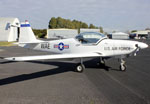
I cannot remember which Harvard was which, but NZ1041 and NZ1044 were the two AirNZ Harvards.
1041 is with John Saunders here in Blenheim and being returned to flying condition. see here
1044 is now airworthy with Bevan Dewes in Masterton see here
-
deaneb - Senior Member
- Joined: Sat Aug 12, 2006 4:40 pm
- Posts: 1565
- Location: Blenheim
Re: Folding wings…..
by cowpatz » Sat Apr 19, 2025 10:21 pm
It looks like 1041 was the one we had. Engine runs were it. Whilst this was taking place the less mature of us would be behind it, in the propwash with our overalls held open, to see how far forward we could lean before falling over. Let’s call it a practical physics exercise.
-
cowpatz - NZFF Pro
- Topic author
- Joined: Wed Mar 07, 2007 3:28 pm
- Posts: 3774
Re: Folding wings…..
by Charl » Wed Apr 23, 2025 11:05 am
Yes a great read...
My old mate AJ Potts (DC10 driver) commented on how far back the nosewheel was - turning around you'd be waay out over the grass!
My old mate AJ Potts (DC10 driver) commented on how far back the nosewheel was - turning around you'd be waay out over the grass!
-

Charl - NZFF Pro
- Joined: Mon May 01, 2006 8:28 am
- Posts: 9801
- Location: Auckland
Re: Folding wings…..
by cowpatz » Fri May 30, 2025 8:33 pm
Part 3
My first flying job
Not long after I commenced my engineering apprenticeship I started learning to fly, along with a fellow apprentice engineer from my course. Together, we took our first lesson, “Effect of controls” with theAirline Flying Club, at Ardmore Airfield, on the 30th of April 1977. We chose the Airline flying club because back then it was associated with Air NZ (discounted rates) and they operated from Ardmore during the weekends, and from Auckland International airport during the week. The first aircraft I flew was a Victa Airtourer (AT115) ZK-DDP. It was basically a brick with a bubble canopy and a 115 HP engine. Apparently, the canopy produced one third of the total lift generated (Something one had to take into account if flown with the canopy open). A “side by side” 2 seater trainer that was a little unusual in that it had a “spade handle” control column in the middle with a throttle for each seat occupant located on the inside of the fuselage sides. The fuel tank was a flexible rubber diaphragm located in the fuselage. Care had to be taken when doing aerobatics so as not to twist the tank. The first few lessons consisted of a quick run through the lesson plan usually followed by a “I have control” from the instructor. I would hand over control and then he would initiate a dogfight with the instructor in my mate’s aircraft. This was great fun at first, but after a couple more times of this we realised that we were paying for their enjoyment! The basic training was great fun and after a grand total of 6 hrs and 15 minutes I was on my first solo circuit. The instructor on this occasion was also an Air NZ aircraft engineer and later went on to join Air NZ as a pilot. Mel was his name, and I was to be his first solo student. I got to fly with Mel on the F27 many years later, and a year or so ago his son, Blair, joined Air NZ as a Second officer on the 777. I requested Blair to be the Second officer on my last tour of duty. Mel also came out in the early hours to greet us on our arrival at Auckland and to join in on the celebrations.
Back in those days an hour in an Airtourer was around $13/ hr dual (around a third of my weekly pay). During the course of my Private Pilot Licence (PPL) training I moved from the Airline flying club to the Waitemata Aero club. Mainly because they had a 130 HP Airtourer (AT130) ZK-DLU. That one performed quite well.
The training was excellent, and I ended up passing my PPL flight test on May 17th, 1978……not long after my 18th birthday. The log book total now standing at 44 hrs and 30 mins. For the next few years, I just accumulated hours as best I could, including a few when I was down in Christchurch during my engineering outstation time there. The types flown were the PA28-151 (Warrior 2), C172 and the C206. The C206 was my favourite but also the most expensive to fly at $60/hr. I really needed to increase my circle of friends to help pay for it!
After I completed my engineering apprenticeship in 1980, I was assigned to work as a line engineer. This involved being down at the terminal conducting aircraft turnarounds and maintenance that did not require the use of a hangar. I loved it. There was a lot of pressure and responsibility, but it was great to be involved in the aircraft operational side of the airline. I ended up on the overnight shift, 11pm until 7am, 6 nights on and 3 off. By this time the Air NZ and NAC merger had already taken place and after 18 months of working the international ramp my shift team was assigned to also assist with the Domestic ramp engineering maintenance group. The Domestic airline flying shedule was really from 5 am to 11 pm, so the evening maintenance work mainly consisted of minor pre-service checks and defect rectification. I didn’t really enjoy this aspect of the job at all. The licenced engineers (LAMEs) on my shift team were wanting to get the F27 and 737-200 ratings added to their licence’s, and this required gaining component change experience, such as engine/prop changes….infact any component. This left the less desirable tasks to the rest of us. Greasing, wheel and brake changes RR Dart engine burner cleans and the like. After the International line it was menial work. On one particular shift, early in 1983, one of the Domestic Engineering Foremans took me aside and remarked that I didn’t appear to be that happy. I went on to explain why, and following a brief chat, he said “have you considered leaving?” He meant it in a constructive way. It was something that I had never really considered. It was one of lifes “lightbulb” moments. At that time voluntary redundancy was on offer to various employee groups. After a day or two of pondering I convinced myself to make the move. It was a big call to leave the comfort and security of a well paid and secure job for the uncertainty of a flying career. By this stage I had accumulated a grand total of xxx hrs. I enrolled with Auckland Aero Club in their 150hr Commercial pilots training course. The normal hour requirement for a commercial pilots licence is 200 hrs, but this could be reduced to 150 hours if training on an approved course. The $14000 I received as a redundancy payout, plus some meagre savings, was to get me through this course and to live off during this time.
From memory there was around 10 of us on the course and it involved ground based theory lectures as well as flight training. It was quite a sociable group too and we did get up to a fair amount of mischief. One of the victims of that mischief was our technical knowledge lecturer, Grant. He would drive to and from work in a little mini. On two occasions after the day’s lecturing, and whilst he was away flying, we would reposition his car to some interesting places. The first was to lift it up then carry it up a few stairs into the club room foyer and leave it sitting at a 90-degree angle to the door. The second was to straddle it across one of the large drainage ditches located on the airfield. Naturally after such fine work we would retire to the club bar to celebrate and listen for the howls of protest that would eventually follow. He never did see the funny side to it and of course it was so much harder to undo our work after quenching our thirst at the bar for an hour or two.
Auckland Aero Club replaced its fleet of Airtourers for Grumman AA1 Lynxs. Not a bad trainer aircraft and I enjoyed my commercial training in them. Most of my course passed all their theory subjects the first time around, and following the acquisition of the required hours, we each undertook the flight test with a CAA testing officer. My turn duly arrived on the 8th June 1983 and was to be with CAA testing officer Bruce James. Bruce was a tall, older, and softly spoken guy. He and his CAA testing partner, Harry Bielby, regularly flew around the North Island conducting flight tests. My test consisted of theory and practical sections. The theory was completed first and required the satisfactory completion of a full loadsheet as well as fuel and takeoff performance calculations. Then it was out for a supervised preflight check followed by the air work aspect. Part of the test was to demonstrate 2 maximum rate turns. One in each direction. After each of my turns there was a satisfying bump as we exited through the aircraft wake at the start of the turn. Perfect I thought. However, Bruce remarked “Not too bad but you lost height in the turns”. I replied “but we hit the wake both times” to which he came back with “Yes, but the wake descends behind the aircraft therefore you lost height”. He then asked if he could take control do a few as it had been a while since he had done any. In fact, it was common knowledge that he said this to practically every candidate. His turns were immaculate with the altimeter needle looking as if it had frozen on the dial……he had had a lot of practice over the years. After returning and shutting down he dryly said in a monotone voice “That’s a pass” followed by “but no one will employ you because you’re too slow with the paperwork”. This was also something he said to nearly every candidate. And so, with the grand sum of 205 hrs I was to be NZs latest commercial pilot.
It was to be a year or so later that I caught up with Bruce again. In between tests he would always go to the Auckland Aero Club tea rooms where he would have his lunch, along with a pot of tea. On one occasion I was also there, along with my good mate Phillip (that I lived across the road from when I was younger, as mentioned in part 1). Phillip was employed by the commercial division of Auckland Aero Club flying their Cherokee six’s and the twin engined Victor Partenavia. We joined Bruce, with Phillip sitting across the able from him. Phillip and I were about to tuck into our meat pies. I don’t think I mentioned this earlier, but Phillip was rather accident prone in his earlier years. Along with his meat pie Phillip had a sachet of tomato sauce….you know the ones where you have to peel back the foil covering. He was struggling with this, so he held it up and gave it a big yank. With that the entire contents of the sachet flew across the table and landed across Bruce’s shirt and tie. Unmoving, Bruce just sat there stony faced and said nothing. Phillip immediately grabbed some napkins, and along with a repetitious apology, tried to wipe off the sauce from Bruce’s shirt. All it did was to smear it in further and over a bigger area. Bruce just sat there and still said nothing. After an awkward silence Phillip remarked “I’m so sorry” to which Bruce calmly replied “Not half as sorry as I am”.
A 150 hr Commercial Pilot is about as useful to an employer as an ashtray would be on a motorbike. Getting that first job is difficult, especially when competing against your fellow course mates. Auckland Aero Club were looking to employ a “line boy” from our course group. In the end it came down to them choosing between myself and Marty. Even though menial, the job was really a gateway into flying for the commercial side of the club. It was really a general dogsbody position which involved cleaning and refuelling aircraft and assisting with the loading and unloading of the commercial flights to Great Barrier Island. It was a closely run race, but in the end my new friend Marty got the job. The reason given was that he was more in need than I was. They reasoned this by the fact that I drove a very nice Black Triumph Stag (with wire wheels) and that they thought that I had plenty of money.
So, my life at that pont revolved around being a pain in the arse at various flight training facilities, offering to clean windshields and fuel aircraft, in the hope of getting a few hours flying in lieu of payment. It also required many hours “networking” in many of the aero club bars trying to find a job opening that someone had left as the moved on o something better. As time progressed, I had spent all my money and had to sell my “Babe magnet” Triumph Stag to survive. It eventually got to the stage that I had to apply for the unemployment benefit. Not having ever done this process, I attended my interview wearing a 3 piece suit. On entering the building I soon discovered that the dress standard was more scruffy jeans, jandals and a hoodie. At the start of my interview, I was asked what job I would like, to which I quite confidently replied “a pilot”. Unflinching the interviewer calmly paged through her book and responded with “I don’t seem to have any of those at the moment, what else might you like to do?”. The back up was a courier driver. After just 2 weeks on the unemployment benefit I found my own job as a courier driver and I did this for a year or so……. alongside my line boy job with Motor Holdings Flight School (Ardmore) on the weekends. It was formally known as Dalholf and King and now as Flightline.
My very first commercial flight was a VFR charter in a Cessna Cutlass C172 RG. It was to fly the owner of a big manpower hire company and required flying him to the Kawarau pulp and paper mill. It involved departing Ardmore early in the morning, sitting around all day and returning in the late afternoon. All for just 1.3 hrs in the logbook. But it was flying that I did not have to pay for! This is a fairly common start for new Commercial pilots……away all day for a mere hour or two of hours flying. It just isn’t really economical to have a full-time staff member be away for so long. Once getting your “foot in the door” things start to improve, at least they did for me. Regular charters, scenic flights etc. Motor Holdings was also an approved 150 hr commercial pilot training course and I soon got employed to instruct on this course as well as do the odd charter flight. As is also very common in the industry, I commenced my Flight Instructor rating training. As I was now an “employee” the aircraft hire was at a very good rate.
My instructor for this training was to be with the Chief pilot/Instructor, Brian Cox. Brian was a legend in the industry and maintained active flying until his late 80s and only recently passed away. His enthusiasm was boundless. I did some aerobatic training with him as well and it was common place to do this training during his lunchtime. He would sit there eating his lunch from a crumpled paper bag, as I was looping, snap rolling, and stall turning my way around the sky….often poorly, and usually with a subsequent high G pull out.
After gaining my C cat instructors rating I was employed full time. A typical work day included road traffic patrols for various Auckland radio stations. The most notable was the “Eye in the Sky” traffic reports with Bill Mudgeway for Radio I. It was twice a day midweek with the morning session and usually having a secial guest on board. At one point Auckland city had 4 fixed wing and 1 helicopter doing these patrols and eventually we all had to mutually settle on some rules when conducting the patrols. On the weekends there would be beach patrols as well. The company also had a regular scheduled service (3 times a day) to Waiheke and Auckland airport. The airstrip at Waiheke was interesting. It was effectively a one way strip. Land uphill to the North and take off downhill to the South……..well usually. Anything over a 10 kt Northerly and a decision had to be made as to whether or not to land and takeoff in the opposite direction. It was just experience and seat of he pants stuff that decided both the direction and payload to be carried. Due to the airstrips nonlinear and undulating slope the traditional takeoff and landing graphs were of no use. To make matters worse at the bottom of the strip was a graveyard (an incentive to get it right). At times a takeoff uphill would be required, and once airborne an immediate right hand turn was required to remain clear of terrain. This was usually around a teepee structure that some alternative lifestylers were living in. The Cessna 206 was the aircraft of choice for operations as the power to weight ratio was excellent. The Cessna 172 was only really used if there was 1or 2 passengers. The Cessna 207 was the challenging one to operate. A 7 seater with a slightly different wing to the 206. Often when loading and unloading it would sit on it’s tail. The aft CofG limit was easy to determine. If after loading it sat on it’s tail, then as long as after starting (and with about 1000 RPM of power on) the tail came up off the ground then you were within limits and good to go. Often when returning to Ardmore and shutting down, the aircraft would crash down on the tail skid, much to the annoyance of the manager, who’s office window was right beside our parking spot!
I went on to gain my multi engine instrument rating and B cat instructor rating, along with flight testing privileges. Those were long and busy days, with very little in the way of pay. Notable experiences during that period included operating the Cessna Crusader T303 and Piper Aerostar on charter work. Two of these charters were for a couple of International rally teams, to act as airborne support stations. The first one was for Audi and the second for Lancia. We would have a rally team member onboard who would be equipped with several radios. His task was to monitor not only his team but also the other teams. In addition to this he would listen to the navigator reading out the pace notes and pick it up should the navigator lose his place. We would orbit overhead the stages at 10000ft.
For a few years Air NZ did not employ pilots and this meant that all of the third level operators were well crewed. Even if a position became available with them the hour/experience required was huge. Surprisingly, Motor Holdings was a pool of pilots that were regularly employed by Air NZ. The most notable employee being David Morgan who went on to be the Chief pilot and current holder of Air NZ’s Airline Operators Certificate.
In the middle of 1986, I received a letter from Air NZ informing me that I had been successful in my application and that my course date was to commence on the 18th August, 1986. I had made it. I was to become a Fokker F27 First Officer.
I’ll leave that to part 4
Total time: 2336 hrs
My first flying job
Not long after I commenced my engineering apprenticeship I started learning to fly, along with a fellow apprentice engineer from my course. Together, we took our first lesson, “Effect of controls” with theAirline Flying Club, at Ardmore Airfield, on the 30th of April 1977. We chose the Airline flying club because back then it was associated with Air NZ (discounted rates) and they operated from Ardmore during the weekends, and from Auckland International airport during the week. The first aircraft I flew was a Victa Airtourer (AT115) ZK-DDP. It was basically a brick with a bubble canopy and a 115 HP engine. Apparently, the canopy produced one third of the total lift generated (Something one had to take into account if flown with the canopy open). A “side by side” 2 seater trainer that was a little unusual in that it had a “spade handle” control column in the middle with a throttle for each seat occupant located on the inside of the fuselage sides. The fuel tank was a flexible rubber diaphragm located in the fuselage. Care had to be taken when doing aerobatics so as not to twist the tank. The first few lessons consisted of a quick run through the lesson plan usually followed by a “I have control” from the instructor. I would hand over control and then he would initiate a dogfight with the instructor in my mate’s aircraft. This was great fun at first, but after a couple more times of this we realised that we were paying for their enjoyment! The basic training was great fun and after a grand total of 6 hrs and 15 minutes I was on my first solo circuit. The instructor on this occasion was also an Air NZ aircraft engineer and later went on to join Air NZ as a pilot. Mel was his name, and I was to be his first solo student. I got to fly with Mel on the F27 many years later, and a year or so ago his son, Blair, joined Air NZ as a Second officer on the 777. I requested Blair to be the Second officer on my last tour of duty. Mel also came out in the early hours to greet us on our arrival at Auckland and to join in on the celebrations.
Back in those days an hour in an Airtourer was around $13/ hr dual (around a third of my weekly pay). During the course of my Private Pilot Licence (PPL) training I moved from the Airline flying club to the Waitemata Aero club. Mainly because they had a 130 HP Airtourer (AT130) ZK-DLU. That one performed quite well.
The training was excellent, and I ended up passing my PPL flight test on May 17th, 1978……not long after my 18th birthday. The log book total now standing at 44 hrs and 30 mins. For the next few years, I just accumulated hours as best I could, including a few when I was down in Christchurch during my engineering outstation time there. The types flown were the PA28-151 (Warrior 2), C172 and the C206. The C206 was my favourite but also the most expensive to fly at $60/hr. I really needed to increase my circle of friends to help pay for it!
After I completed my engineering apprenticeship in 1980, I was assigned to work as a line engineer. This involved being down at the terminal conducting aircraft turnarounds and maintenance that did not require the use of a hangar. I loved it. There was a lot of pressure and responsibility, but it was great to be involved in the aircraft operational side of the airline. I ended up on the overnight shift, 11pm until 7am, 6 nights on and 3 off. By this time the Air NZ and NAC merger had already taken place and after 18 months of working the international ramp my shift team was assigned to also assist with the Domestic ramp engineering maintenance group. The Domestic airline flying shedule was really from 5 am to 11 pm, so the evening maintenance work mainly consisted of minor pre-service checks and defect rectification. I didn’t really enjoy this aspect of the job at all. The licenced engineers (LAMEs) on my shift team were wanting to get the F27 and 737-200 ratings added to their licence’s, and this required gaining component change experience, such as engine/prop changes….infact any component. This left the less desirable tasks to the rest of us. Greasing, wheel and brake changes RR Dart engine burner cleans and the like. After the International line it was menial work. On one particular shift, early in 1983, one of the Domestic Engineering Foremans took me aside and remarked that I didn’t appear to be that happy. I went on to explain why, and following a brief chat, he said “have you considered leaving?” He meant it in a constructive way. It was something that I had never really considered. It was one of lifes “lightbulb” moments. At that time voluntary redundancy was on offer to various employee groups. After a day or two of pondering I convinced myself to make the move. It was a big call to leave the comfort and security of a well paid and secure job for the uncertainty of a flying career. By this stage I had accumulated a grand total of xxx hrs. I enrolled with Auckland Aero Club in their 150hr Commercial pilots training course. The normal hour requirement for a commercial pilots licence is 200 hrs, but this could be reduced to 150 hours if training on an approved course. The $14000 I received as a redundancy payout, plus some meagre savings, was to get me through this course and to live off during this time.
From memory there was around 10 of us on the course and it involved ground based theory lectures as well as flight training. It was quite a sociable group too and we did get up to a fair amount of mischief. One of the victims of that mischief was our technical knowledge lecturer, Grant. He would drive to and from work in a little mini. On two occasions after the day’s lecturing, and whilst he was away flying, we would reposition his car to some interesting places. The first was to lift it up then carry it up a few stairs into the club room foyer and leave it sitting at a 90-degree angle to the door. The second was to straddle it across one of the large drainage ditches located on the airfield. Naturally after such fine work we would retire to the club bar to celebrate and listen for the howls of protest that would eventually follow. He never did see the funny side to it and of course it was so much harder to undo our work after quenching our thirst at the bar for an hour or two.
Auckland Aero Club replaced its fleet of Airtourers for Grumman AA1 Lynxs. Not a bad trainer aircraft and I enjoyed my commercial training in them. Most of my course passed all their theory subjects the first time around, and following the acquisition of the required hours, we each undertook the flight test with a CAA testing officer. My turn duly arrived on the 8th June 1983 and was to be with CAA testing officer Bruce James. Bruce was a tall, older, and softly spoken guy. He and his CAA testing partner, Harry Bielby, regularly flew around the North Island conducting flight tests. My test consisted of theory and practical sections. The theory was completed first and required the satisfactory completion of a full loadsheet as well as fuel and takeoff performance calculations. Then it was out for a supervised preflight check followed by the air work aspect. Part of the test was to demonstrate 2 maximum rate turns. One in each direction. After each of my turns there was a satisfying bump as we exited through the aircraft wake at the start of the turn. Perfect I thought. However, Bruce remarked “Not too bad but you lost height in the turns”. I replied “but we hit the wake both times” to which he came back with “Yes, but the wake descends behind the aircraft therefore you lost height”. He then asked if he could take control do a few as it had been a while since he had done any. In fact, it was common knowledge that he said this to practically every candidate. His turns were immaculate with the altimeter needle looking as if it had frozen on the dial……he had had a lot of practice over the years. After returning and shutting down he dryly said in a monotone voice “That’s a pass” followed by “but no one will employ you because you’re too slow with the paperwork”. This was also something he said to nearly every candidate. And so, with the grand sum of 205 hrs I was to be NZs latest commercial pilot.
It was to be a year or so later that I caught up with Bruce again. In between tests he would always go to the Auckland Aero Club tea rooms where he would have his lunch, along with a pot of tea. On one occasion I was also there, along with my good mate Phillip (that I lived across the road from when I was younger, as mentioned in part 1). Phillip was employed by the commercial division of Auckland Aero Club flying their Cherokee six’s and the twin engined Victor Partenavia. We joined Bruce, with Phillip sitting across the able from him. Phillip and I were about to tuck into our meat pies. I don’t think I mentioned this earlier, but Phillip was rather accident prone in his earlier years. Along with his meat pie Phillip had a sachet of tomato sauce….you know the ones where you have to peel back the foil covering. He was struggling with this, so he held it up and gave it a big yank. With that the entire contents of the sachet flew across the table and landed across Bruce’s shirt and tie. Unmoving, Bruce just sat there stony faced and said nothing. Phillip immediately grabbed some napkins, and along with a repetitious apology, tried to wipe off the sauce from Bruce’s shirt. All it did was to smear it in further and over a bigger area. Bruce just sat there and still said nothing. After an awkward silence Phillip remarked “I’m so sorry” to which Bruce calmly replied “Not half as sorry as I am”.
A 150 hr Commercial Pilot is about as useful to an employer as an ashtray would be on a motorbike. Getting that first job is difficult, especially when competing against your fellow course mates. Auckland Aero Club were looking to employ a “line boy” from our course group. In the end it came down to them choosing between myself and Marty. Even though menial, the job was really a gateway into flying for the commercial side of the club. It was really a general dogsbody position which involved cleaning and refuelling aircraft and assisting with the loading and unloading of the commercial flights to Great Barrier Island. It was a closely run race, but in the end my new friend Marty got the job. The reason given was that he was more in need than I was. They reasoned this by the fact that I drove a very nice Black Triumph Stag (with wire wheels) and that they thought that I had plenty of money.
So, my life at that pont revolved around being a pain in the arse at various flight training facilities, offering to clean windshields and fuel aircraft, in the hope of getting a few hours flying in lieu of payment. It also required many hours “networking” in many of the aero club bars trying to find a job opening that someone had left as the moved on o something better. As time progressed, I had spent all my money and had to sell my “Babe magnet” Triumph Stag to survive. It eventually got to the stage that I had to apply for the unemployment benefit. Not having ever done this process, I attended my interview wearing a 3 piece suit. On entering the building I soon discovered that the dress standard was more scruffy jeans, jandals and a hoodie. At the start of my interview, I was asked what job I would like, to which I quite confidently replied “a pilot”. Unflinching the interviewer calmly paged through her book and responded with “I don’t seem to have any of those at the moment, what else might you like to do?”. The back up was a courier driver. After just 2 weeks on the unemployment benefit I found my own job as a courier driver and I did this for a year or so……. alongside my line boy job with Motor Holdings Flight School (Ardmore) on the weekends. It was formally known as Dalholf and King and now as Flightline.
My very first commercial flight was a VFR charter in a Cessna Cutlass C172 RG. It was to fly the owner of a big manpower hire company and required flying him to the Kawarau pulp and paper mill. It involved departing Ardmore early in the morning, sitting around all day and returning in the late afternoon. All for just 1.3 hrs in the logbook. But it was flying that I did not have to pay for! This is a fairly common start for new Commercial pilots……away all day for a mere hour or two of hours flying. It just isn’t really economical to have a full-time staff member be away for so long. Once getting your “foot in the door” things start to improve, at least they did for me. Regular charters, scenic flights etc. Motor Holdings was also an approved 150 hr commercial pilot training course and I soon got employed to instruct on this course as well as do the odd charter flight. As is also very common in the industry, I commenced my Flight Instructor rating training. As I was now an “employee” the aircraft hire was at a very good rate.
My instructor for this training was to be with the Chief pilot/Instructor, Brian Cox. Brian was a legend in the industry and maintained active flying until his late 80s and only recently passed away. His enthusiasm was boundless. I did some aerobatic training with him as well and it was common place to do this training during his lunchtime. He would sit there eating his lunch from a crumpled paper bag, as I was looping, snap rolling, and stall turning my way around the sky….often poorly, and usually with a subsequent high G pull out.
After gaining my C cat instructors rating I was employed full time. A typical work day included road traffic patrols for various Auckland radio stations. The most notable was the “Eye in the Sky” traffic reports with Bill Mudgeway for Radio I. It was twice a day midweek with the morning session and usually having a secial guest on board. At one point Auckland city had 4 fixed wing and 1 helicopter doing these patrols and eventually we all had to mutually settle on some rules when conducting the patrols. On the weekends there would be beach patrols as well. The company also had a regular scheduled service (3 times a day) to Waiheke and Auckland airport. The airstrip at Waiheke was interesting. It was effectively a one way strip. Land uphill to the North and take off downhill to the South……..well usually. Anything over a 10 kt Northerly and a decision had to be made as to whether or not to land and takeoff in the opposite direction. It was just experience and seat of he pants stuff that decided both the direction and payload to be carried. Due to the airstrips nonlinear and undulating slope the traditional takeoff and landing graphs were of no use. To make matters worse at the bottom of the strip was a graveyard (an incentive to get it right). At times a takeoff uphill would be required, and once airborne an immediate right hand turn was required to remain clear of terrain. This was usually around a teepee structure that some alternative lifestylers were living in. The Cessna 206 was the aircraft of choice for operations as the power to weight ratio was excellent. The Cessna 172 was only really used if there was 1or 2 passengers. The Cessna 207 was the challenging one to operate. A 7 seater with a slightly different wing to the 206. Often when loading and unloading it would sit on it’s tail. The aft CofG limit was easy to determine. If after loading it sat on it’s tail, then as long as after starting (and with about 1000 RPM of power on) the tail came up off the ground then you were within limits and good to go. Often when returning to Ardmore and shutting down, the aircraft would crash down on the tail skid, much to the annoyance of the manager, who’s office window was right beside our parking spot!
I went on to gain my multi engine instrument rating and B cat instructor rating, along with flight testing privileges. Those were long and busy days, with very little in the way of pay. Notable experiences during that period included operating the Cessna Crusader T303 and Piper Aerostar on charter work. Two of these charters were for a couple of International rally teams, to act as airborne support stations. The first one was for Audi and the second for Lancia. We would have a rally team member onboard who would be equipped with several radios. His task was to monitor not only his team but also the other teams. In addition to this he would listen to the navigator reading out the pace notes and pick it up should the navigator lose his place. We would orbit overhead the stages at 10000ft.
For a few years Air NZ did not employ pilots and this meant that all of the third level operators were well crewed. Even if a position became available with them the hour/experience required was huge. Surprisingly, Motor Holdings was a pool of pilots that were regularly employed by Air NZ. The most notable employee being David Morgan who went on to be the Chief pilot and current holder of Air NZ’s Airline Operators Certificate.
In the middle of 1986, I received a letter from Air NZ informing me that I had been successful in my application and that my course date was to commence on the 18th August, 1986. I had made it. I was to become a Fokker F27 First Officer.
I’ll leave that to part 4
Total time: 2336 hrs
Last edited by cowpatz on Sat May 31, 2025 8:54 am, edited 1 time in total.
-
cowpatz - NZFF Pro
- Topic author
- Joined: Wed Mar 07, 2007 3:28 pm
- Posts: 3774
Re: Folding wings…..
by chopper_nut » Sat May 31, 2025 6:10 am
A very good read indeed. The cost of an hour in the Airtourer makes me laugh. I always remember that when I wanted to start flying, a Hughes 300 was $365 an hour and I was earning $360 a week...
Last edited by chopper_nut on Sat May 31, 2025 2:17 pm, edited 1 time in total.
-
chopper_nut - NZFF Pro
- Joined: Wed Oct 25, 2006 9:58 pm
- Posts: 2980
- Location: Wherever the work is
Re: Folding wings…..
by cowpatz » Sat May 31, 2025 8:48 am
Yes the helicopter rates were, and still are very high. I don’t know how anyone can afford to put themselves through the training costs.
I guess the appearance of the Robbie lowered those costs a little. When I was teaching Instrument flight theory, John Funnell would fly his brand new R22 up from Taupo. They were fairly new on the scene. One day he invited me for a flight in it during the lunch break. I took a look inside and noticed that the cyclic yoke system consisted of small diameter tubing with a pip pin holding the horizontal section to the vertical. At each end of the horizontal bar was what looked exactly like a rubber wheelbarrow handle grips! I declined his offer. Even to this day I have not set foot in one.
I think I mentioned here previously that I had the pleasure of meeting Frank Robinson, the designer and owner of the company. He would regularly have breakfast at our crew hotel in LA, the Torrance Marriott. He would regularly drop in before heading out to the factory at Torrance field.
He often remarked about us kiwis doing some amazing things with his helicopter. “So what are you Kiwis doing with my helicopter now?” was his usual greeting. They were probably intended for the personal use or training markets, yet here we were fitting them with spray gear, sling loads and doing cattle mustering. He was amazed, yet underneath I don’t really think he approved of it.
I guess the appearance of the Robbie lowered those costs a little. When I was teaching Instrument flight theory, John Funnell would fly his brand new R22 up from Taupo. They were fairly new on the scene. One day he invited me for a flight in it during the lunch break. I took a look inside and noticed that the cyclic yoke system consisted of small diameter tubing with a pip pin holding the horizontal section to the vertical. At each end of the horizontal bar was what looked exactly like a rubber wheelbarrow handle grips! I declined his offer. Even to this day I have not set foot in one.
I think I mentioned here previously that I had the pleasure of meeting Frank Robinson, the designer and owner of the company. He would regularly have breakfast at our crew hotel in LA, the Torrance Marriott. He would regularly drop in before heading out to the factory at Torrance field.
He often remarked about us kiwis doing some amazing things with his helicopter. “So what are you Kiwis doing with my helicopter now?” was his usual greeting. They were probably intended for the personal use or training markets, yet here we were fitting them with spray gear, sling loads and doing cattle mustering. He was amazed, yet underneath I don’t really think he approved of it.
-
cowpatz - NZFF Pro
- Topic author
- Joined: Wed Mar 07, 2007 3:28 pm
- Posts: 3774
Re: Folding wings…..
by chopper_nut » Sat May 31, 2025 2:23 pm
Those early R22s looked a bit pokey in that respect, sure. The later ones looked much more professionally put together. I think that I've flown every different mark of R22 now and they're a good little machine. Pretty funny story about Frank. I definitely got the impression that he didn't approve of the hook but like everything, they're fine as long as you stick within the limits.
-
chopper_nut - NZFF Pro
- Joined: Wed Oct 25, 2006 9:58 pm
- Posts: 2980
- Location: Wherever the work is
Re: Folding wings…..
by FlyingKiwi » Sun Jun 01, 2025 7:57 am
The Cabri seems to be taking over as the default training helicopter option now, I wonder how the operating costs compare?
-
FlyingKiwi - Senior Member
- Joined: Mon May 29, 2006 4:17 pm
- Posts: 1690
- Location: Auckland
Re: Folding wings…..
by chopper_nut » Sun Jun 01, 2025 5:23 pm
FlyingKiwi wrote:The Cabri seems to be taking over as the default training helicopter option now, I wonder how the operating costs compare?
I don't know if it's taking over but there seems to be a lot more new ones coming into the country vs R22s. I still think that the R22 produces a better pilot. The Cabri is a little more expensive to operate. Burns more fuel and it's almost twice as expensive to buy.
-
chopper_nut - NZFF Pro
- Joined: Wed Oct 25, 2006 9:58 pm
- Posts: 2980
- Location: Wherever the work is
Re: Folding wings…..
by FlyingKiwi » Mon Jun 02, 2025 7:40 am
Interesting re. the fuel burn. In the fixed wing arena generally the selling point of the newer generation trainers is lower fuel burn, and at least in theory cheaper maintenance, which is often partially offset by initial high purchase costs which keeps the legacy aircraft popular. I'd sort of assumed the Cabris wouldn't burn as much fuel as the R22. Incidentally the Grumman AA-1 cowpatz referred to was a great trainer I thought, although unfortunately lack of availability of spares has made them pretty unrealistic to be operated in a club or school environment nowadays. They had a bit of sports car appeal that most of the other common trainers do not have.
Anyway, looking forward to the next installment in this thread!
Anyway, looking forward to the next installment in this thread!
-
FlyingKiwi - Senior Member
- Joined: Mon May 29, 2006 4:17 pm
- Posts: 1690
- Location: Auckland
Re: Folding wings…..
by chopper_nut » Tue Jun 03, 2025 3:21 am
The R22 and Cabri use the same engine (O360) although the Cabri has one traditional magneto and one plasma mag. The reason that the Cabri burns more fuel is because although they both operate at 2650rpm, you're pulling 145hp and 160hp in cruise and takeoff power respectively. In the R22, it's 124hp and 131hp. The Robbie is cheaper to purchase but after 2200 hours, you've got to rebuild it so you've got to be setting aside a lot per hour to cover that off. I could talk about this all day, but I won't.
-
chopper_nut - NZFF Pro
- Joined: Wed Oct 25, 2006 9:58 pm
- Posts: 2980
- Location: Wherever the work is
44 posts
• Page 2 of 3 • 1, 2, 3
Who is online
Users browsing this forum: No registered users and 35 guests